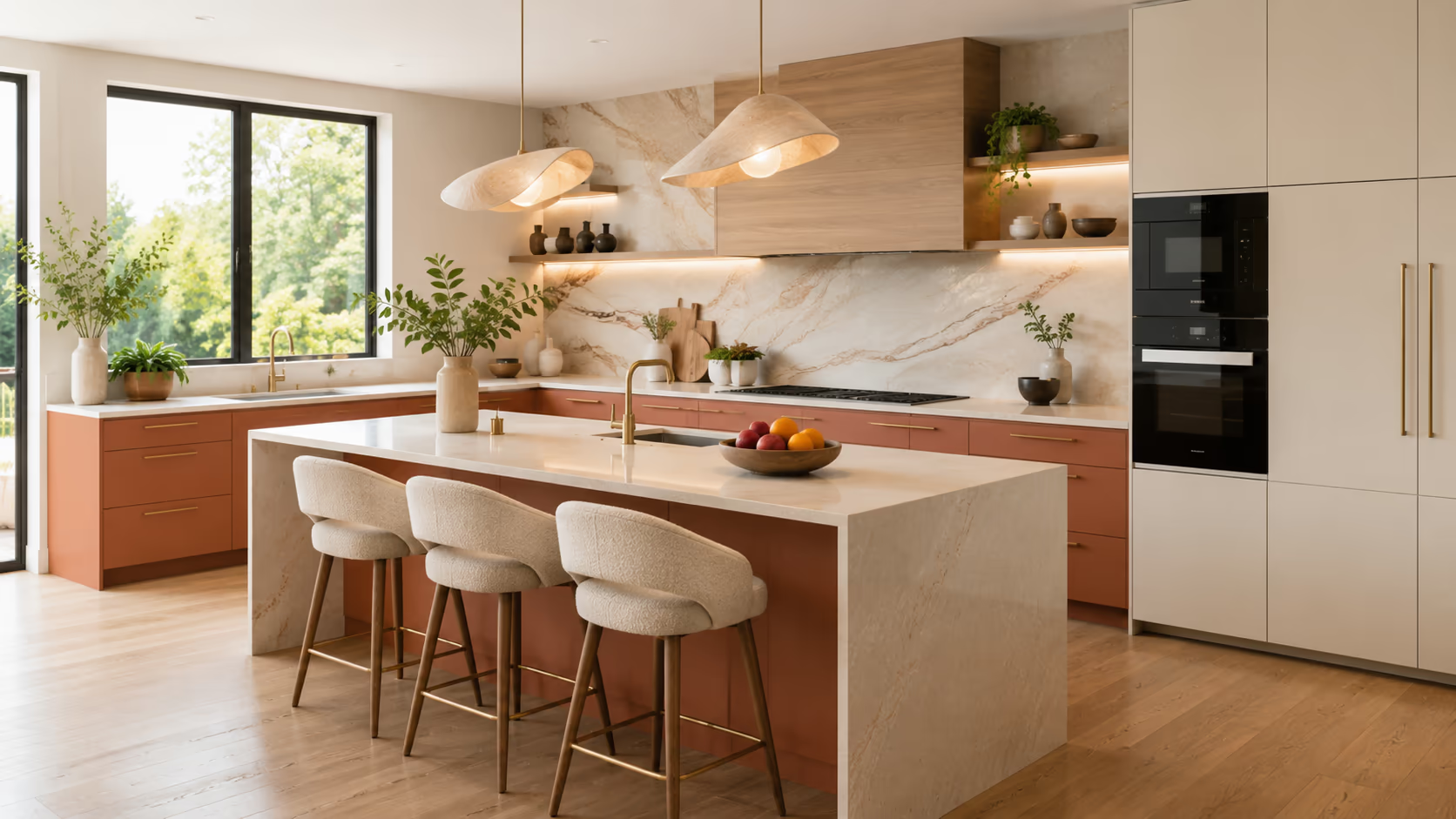
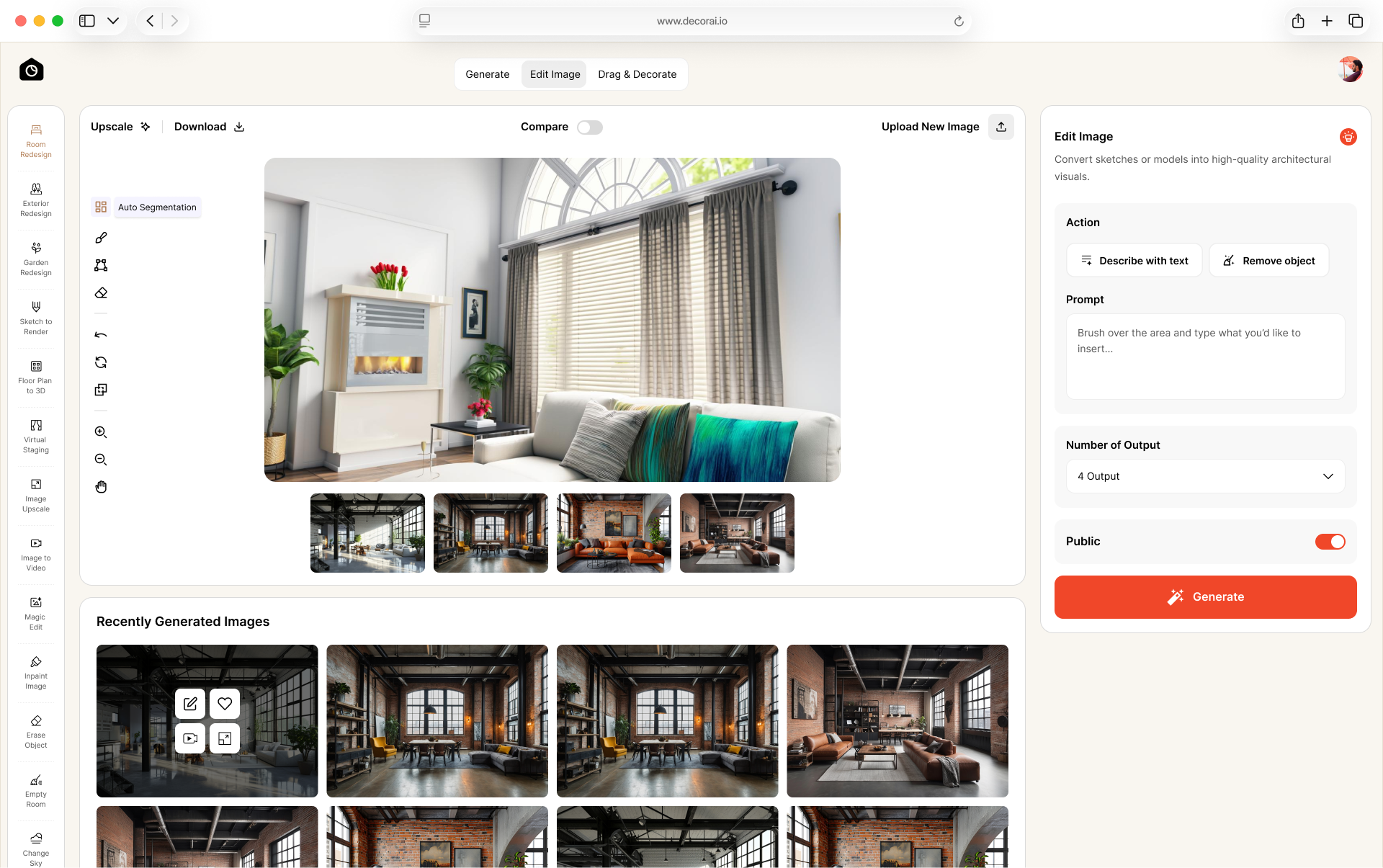
A Japandi living room combines Japanese simplicity with Scandinavian comfort. It uses natural materials, simple furniture, warm colors, and open space to create a room that feels calm and comfortable. Light wood, soft fabrics, low-profile furniture, and warm lighting are common features of this style.
Each item has a purpose, so the room feels neat without looking empty. You can use Japandi ideas in a large living room or a small space. Start with the furniture you already have, choose a few natural textures, and add simple decorations that match your taste.
To get the Japandi look, start with warm white or greige walls, a simple sofa, and wood furniture. Add linen curtains, a textured rug, and warm lighting. Choose a few handmade decorations rather than filling every shelf and table. You can adapt these ideas to your existing room without replacing everything.
One Living Room, Before and After
We gave DecorAI's Room Redesign tool a photo of a nearly empty living room with one gray sofa and chose the Japandi style. DecorAI is the app we make, so treat these images as our own example, not an outside test.
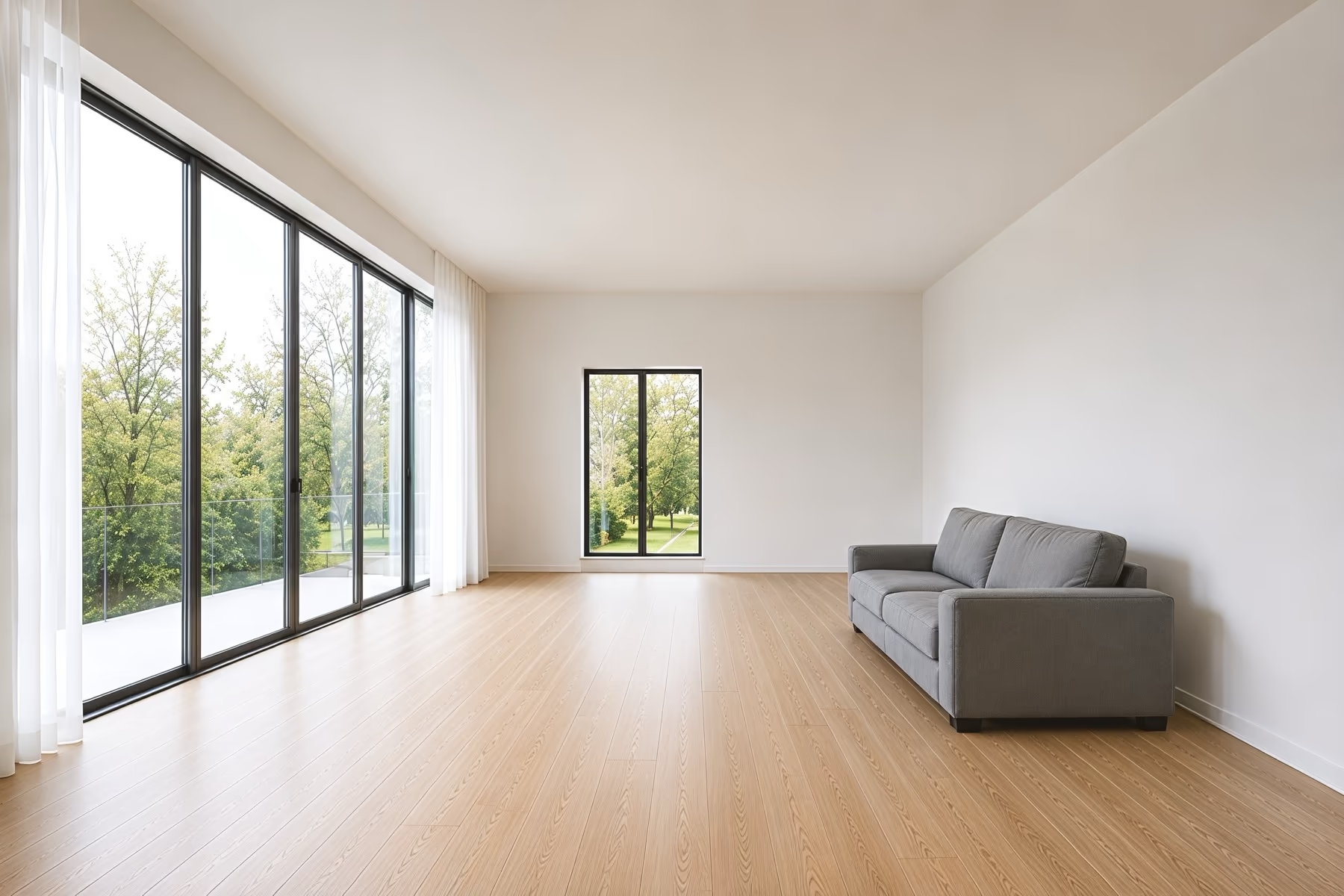
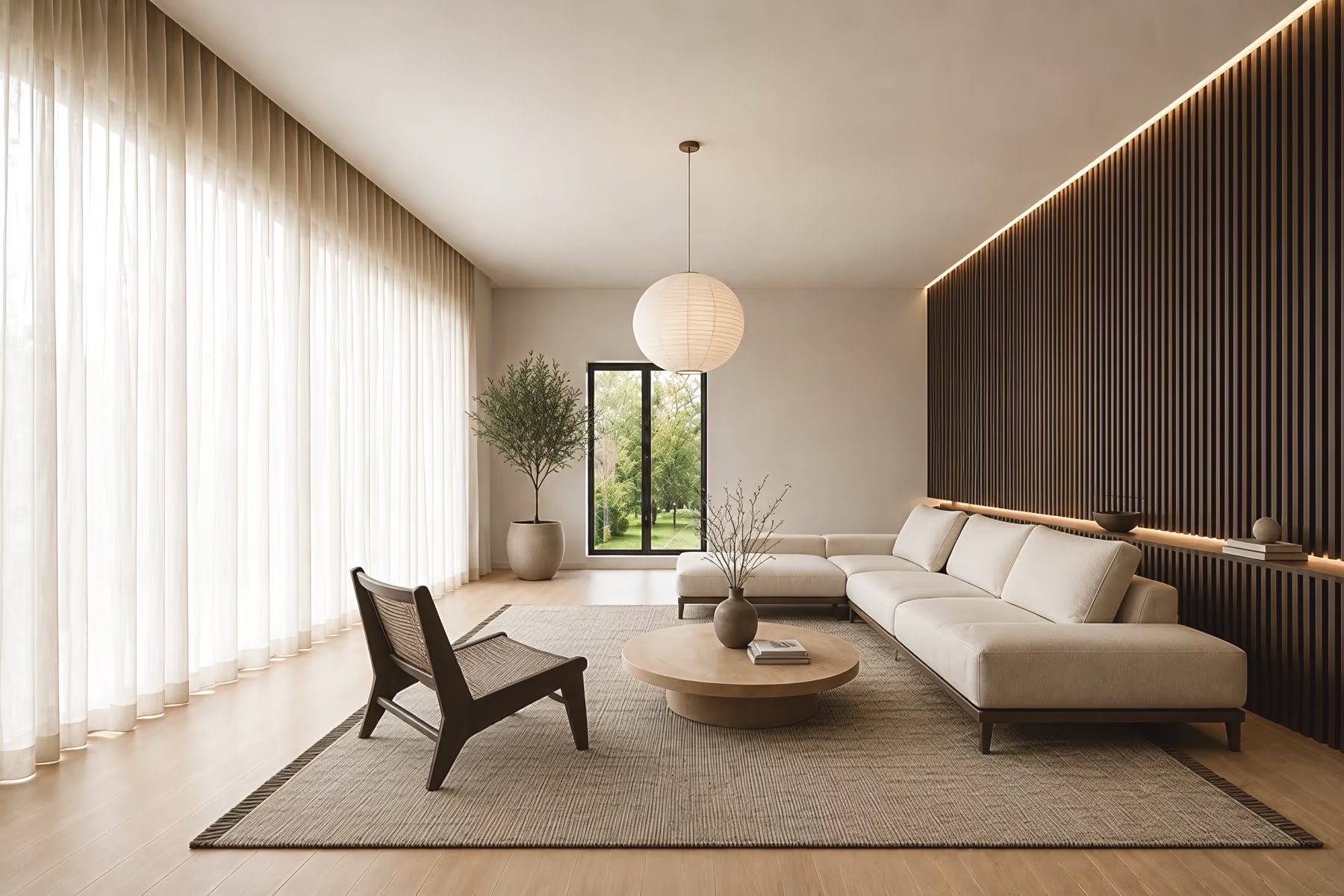
Here is what stayed and what changed:
- Stayed in place: the wall of sliding glass doors, the small window on the back wall, the light oak floor and the shape of the room.
- Added: floor-length sheer linen curtains, a dark wood slat wall with a hidden light strip, a low cream sectional sofa, a round low coffee table in pale wood, a woven lounge chair with a dark wood frame, a white paper lantern, an olive tree in a clay pot and a flat-weave rug under the seating.
Use the result as a visual reference, then check furniture sizes, walking space, and other practical details before buying anything.
What Is a Japandi Living Room?
Japandi (Japan plus Scandi) combines the Japanese idea of wabi-sabi, finding beauty in simple, imperfect, natural things, with the Scandinavian idea of hygge, a cozy and lived-in comfort. In a living room, that means calm, uncluttered space that still feels warm enough to sit in all evening.
The name is new, but the link between the two cultures is old. In the second half of the 19th century, Japan opened up to the West, and Japanese woodblock prints, ceramics and decorative arts drew great interest in Europe. That interest reached Denmark in part through Arnold Krog of the Royal Porcelain Factory, who saw a collection of Japanese art in Paris in 1886, according to the Danish Architecture Center. Both traditions value simple forms, natural materials and good craftsmanship, as the BBC and Architectural Digest both note.
Japanese design brings empty space (often called ma), darker earthy tones and worn, handmade things. Scandinavian design brings lighter woods, soft textiles and everyday comfort.
Japandi vs. Scandinavian vs. Japanese Minimalism
Japandi, Scandinavian design, and Japanese minimalism share a love of simple spaces and useful furniture. The main differences are in their overall feel, materials, and use of decoration.
| Feature | Japandi | Scandinavian | Japanese minimalism |
|---|---|---|---|
| Overall feel | Calm, warm, and balanced | Bright, cozy, and welcoming | Quiet, simple, and uncluttered |
| Colors | Warm neutrals, earthy shades, and a few dark accents | White, cream, pale gray, and soft pastels | Natural shades, muted colors, and restrained contrast |
| Materials | Wood, linen, paper, clay, and other natural textures | Light wood, wool, cotton, and other cozy textures | Wood, stone, paper, bamboo, and natural finishes |
| Furniture | Simple shapes, often with a low profile | Functional pieces with clean lines | Minimal furniture with a strong focus on purpose |
| Decoration | A few handmade or meaningful objects | Cozy textiles, artwork, and personal touches | Very few objects, chosen with care |
| Main focus | Balance between simplicity and comfort | Comfort, function, and a welcoming home | Simplicity, purpose, and open space |
15 Japandi Living Room Ideas for a Calm, Beautiful Home
Want a living room that feels simple, warm, and easy to live in? These Japandi living room ideas show how natural wood, soft colors, comfortable furniture, and thoughtful details can work together. You do not need all 15. Pick four or five that fit your room and budget.
1. Start With Warm, Natural Wall Colors
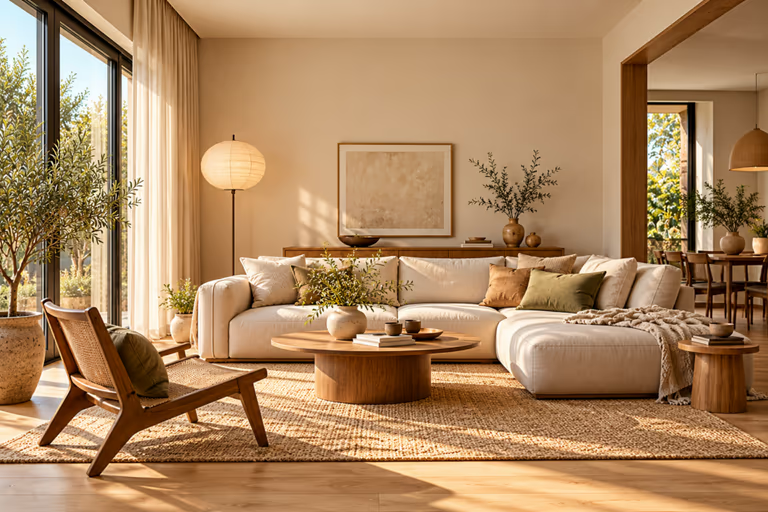
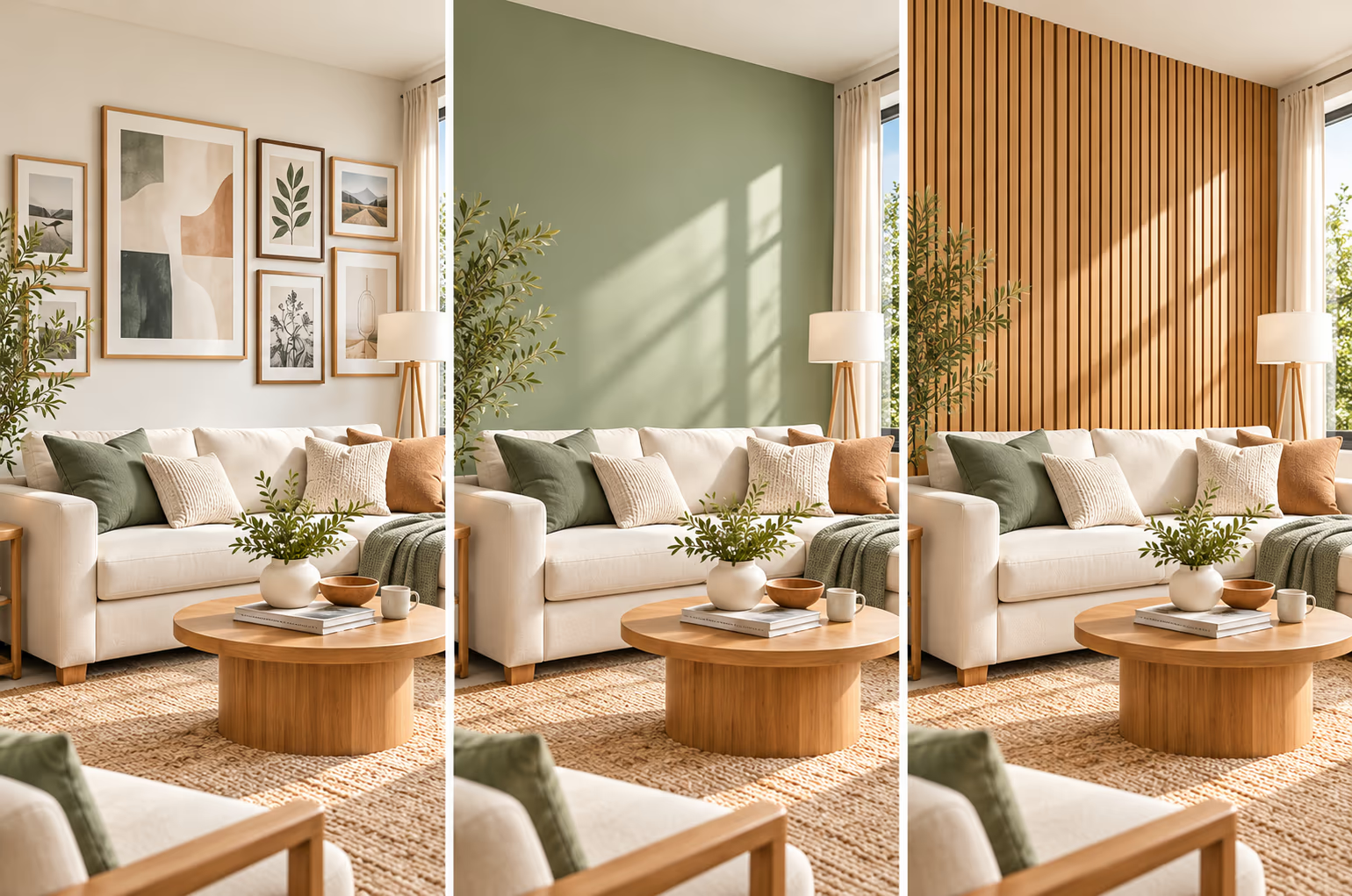
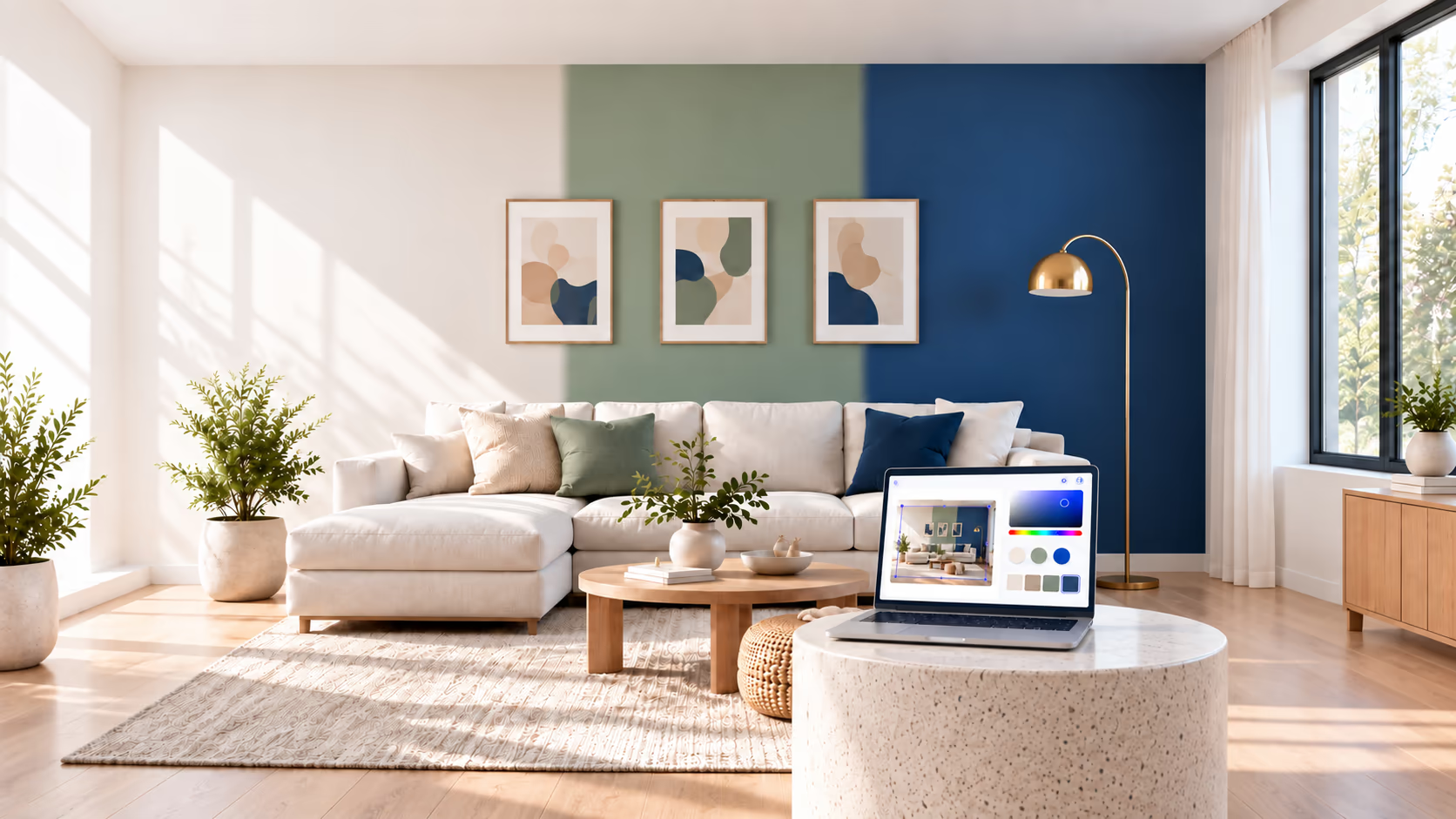
The base of a Japandi living room is a warm off-white or greige wall, not a stark white. Warm neutrals make wood and linen look richer. Good paint colors to sample:
- Sherwin-Williams Alabaster (SW 7008), a soft warm white
- Benjamin Moore Pale Oak (OC-20), a light greige
- Sherwin-Williams Accessible Beige (SW 7036), a deeper sand
- Benjamin Moore Revere Pewter (HC-172), a warm gray for a moodier room
Check a large sample board in the morning and in the evening. Our guide on how light affects paint color explains why.
2. Mix Light and Dark Wood Tones
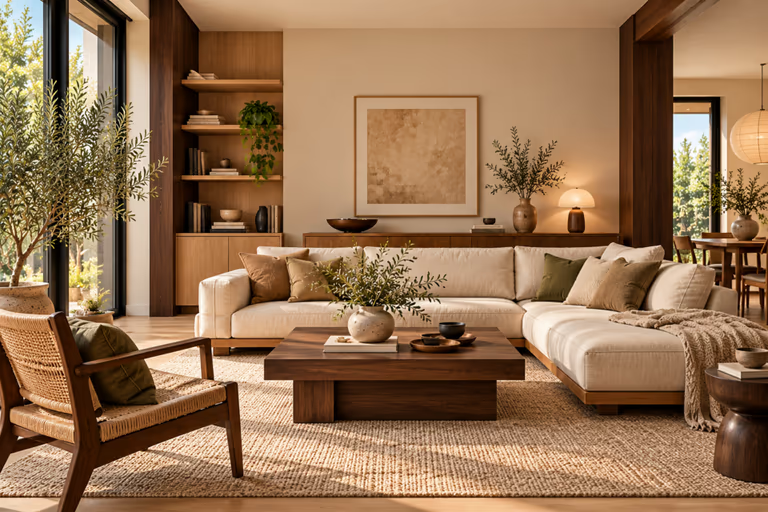
Japandi living rooms often combine pale wood with a few darker pieces to create contrast. Rather than using the same wood finish everywhere, choose one main tone and add a second tone in smaller amounts. Here are some combinations to try:
- White oak and walnut
- Ash and smoked oak
- Natural oak and dark-stained wood
- Pale wood and teak
3. Choose a Simple, Comfortable Sofa
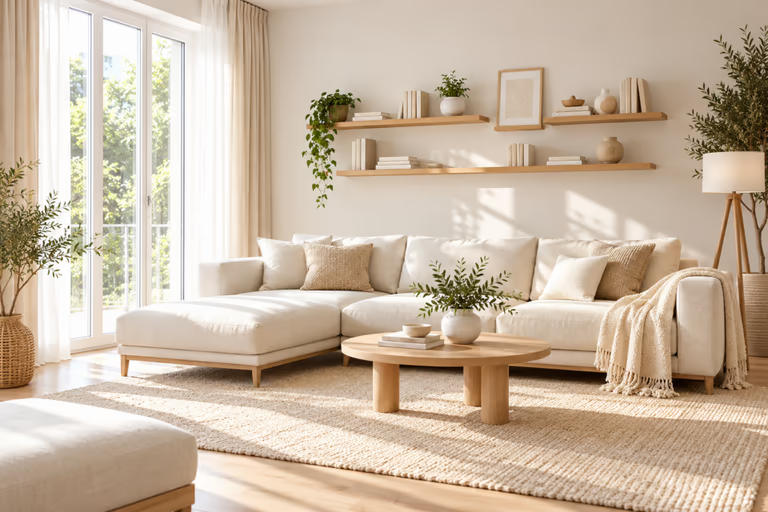
Look for a sofa with clean lines, a simple shape, and a comfortable seat. Low-profile designs often suit Japandi rooms, but comfort should come first.
Cream, beige, taupe, and muted gray are useful upholstery choices. If your sofa is already in a different color, balance it with a neutral rug and understated cushions instead of replacing it just to match the style.
4. Add a Solid Wood Coffee Table
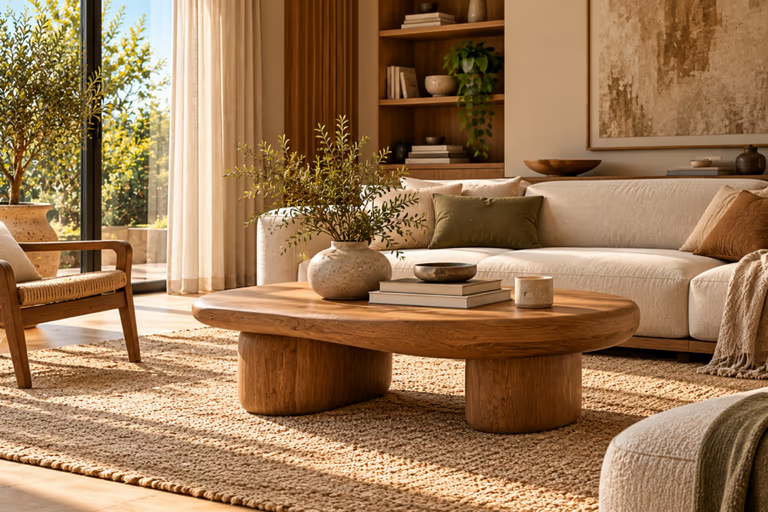
Choose a soft-cornered rectangle or a low round drum in solid wood. Keep the table height within an inch or two of the sofa seat, usually 14 to 16 inches for a low sofa, and leave about 16 to 18 inches between the table and the sofa so legs have room. A matte oil finish shows the grain better than gloss lacquer.
Here are a few coffee table style ideas:
- Round coffee table
- Oval coffee table
- Chunky rectangular table
- Low drum-style table
5. Add a Natural Rug Under the Seating Area
A rug helps connect the sofa, chairs and coffee table, making the seating area feel like one complete space. In a Japandi living room, choose a simple pattern or a plain design with a natural texture. These materials and colors work especially well:
- Flatweave wool
- Jute
- Wool and cotton blends
- Muted neutral rugs
Choose a rug large enough for the front legs of the sofa and chairs to rest on it. An 8 x 10-foot rug often works in an average living room, while a larger 9 x 12-foot rug may suit a spacious seating area. Measure your furniture arrangement before buying.
6. Layer Lighting at Different Heights
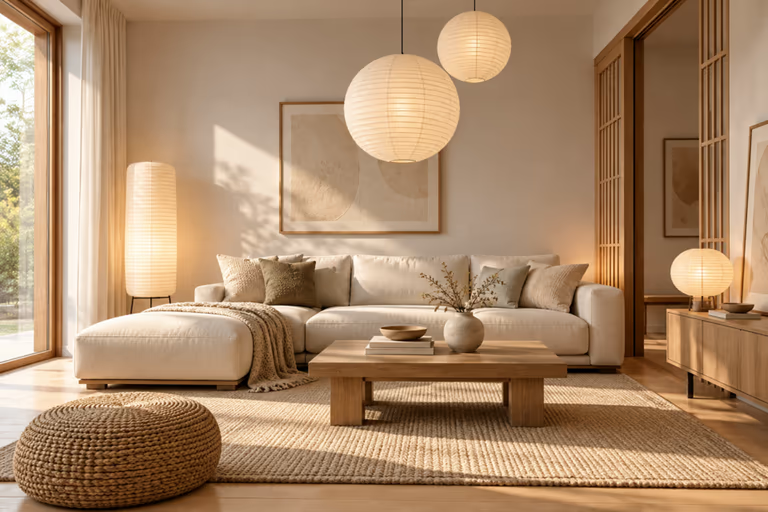
Japandi lighting comes from several small, warm sources instead of one bright ceiling light. Use bulbs at 2700K or warmer and put them on dimmers where you can. A simple plan is a large paper pendant or paper floor lamp, one table lamp at seated eye level, and one small lamp on a shelf or the floor. Three sources is a good minimum.
7. Frame Windows With Simple Linen Curtains
Linen curtains soften the edges of a window, filter daylight and add a gentle fabric texture to a Japandi living room. Choose plain panels rather than bold patterns or heavy decorative trims. These options are worth considering:
- Sheer white linen
- Natural flax linen
- Light beige linen
- Lined linen curtains
For a taller-looking room, hang the curtain rod close to the ceiling or several inches above the window frame. If you need more privacy or darkness, place a plain roller shade behind the curtains. This lets you control light when needed while keeping the visible window treatment simple.
8. Layer Textures With Cushions and Throws
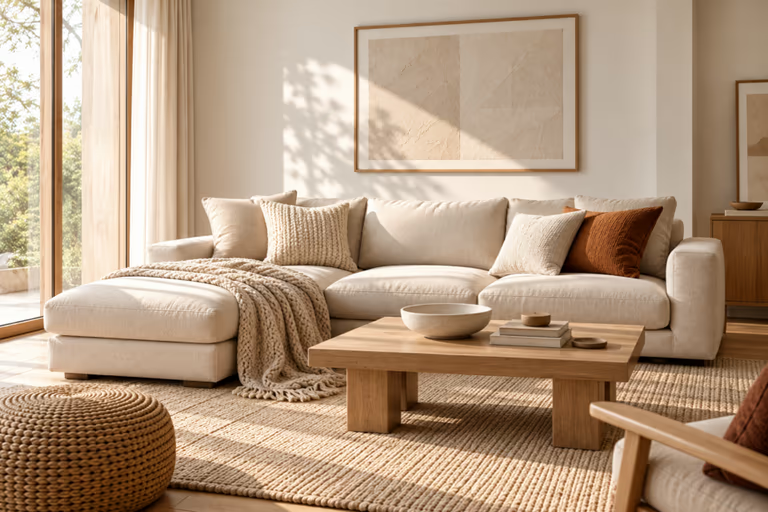
A Japandi sofa does not need many cushions or blankets to feel comfortable. The key is to combine a small number of textures that look different but share a calm color range. Try these combinations:
- Linen sofa and cotton cushions
- Smooth cotton and chunky wool
- Oatmeal, cream and sand
- Cream with rust or olive
Start with two to four cushions in different sizes and add one throw across an arm or the end of the sofa. A lightly woven cushion beside a smoother cotton one creates enough variety without looking crowded.
Choose fabrics that suit how you use the room. Washable covers are practical for daily use, while a soft wool throw works well for cooler evenings. Let texture do most of the work instead of adding lots of patterns or colors.
9. Bring Nature Indoors With One Statement Plant
One well-shaped plant can bring life to a Japandi living room without filling every corner with greenery. Try an olive tree, kentia palm, or snake plant in a simple matte planter. Place it near a window where natural light can highlight its leaves and cast gentle shadows across a plain wall.
10. Decorate With Handmade, Characterful Objects
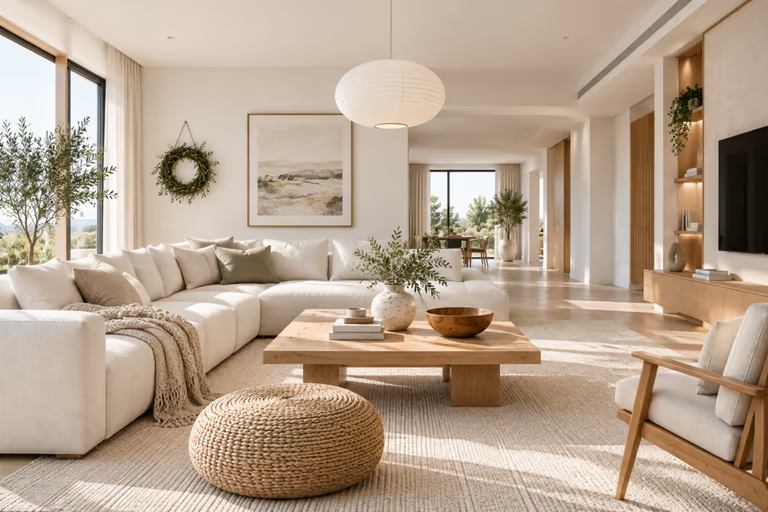
Give your living room personality with a few objects that show the beauty of natural materials and skilled handwork. Try a hand-thrown ceramic vase, a carved wooden bowl, or a small sculptural clay piece. Choose different shapes rather than matching sets, and leave enough space around each object for it to stand out.
11. Treat Empty Space as Part of the Design
A Japandi living room needs enough open space for people to walk, sit and relax comfortably. Even beautiful furniture can make the room feel crowded when too many pieces compete for attention. Before adding anything new, check the arrangement and look for ways to make movement easier.
- Clear walkways
- Give the sofa space
- Use fewer storage pieces
- Leave shelves partly empty
- Keep the coffee table manageable
12. Make the TV Wall Feel Calm and Integrated
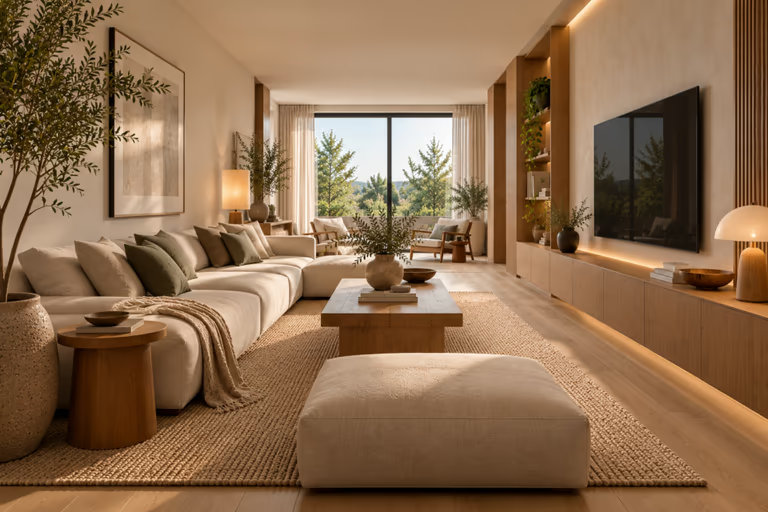
A television can fit naturally into a Japandi living room without becoming the main feature of the space. The goal is to give it a simple setting and keep the everyday items around it out of sight. A low wooden media console is a good starting point.
- Choose a long, low console
- Use closed storage
- Keep cables out of sight
- Add one small handmade object or a simple book stack
13. Add Architectural Interest With Wood Slats
Vertical wood slats bring depth and a sense of order to a Japandi living room. Add them to one wall, a room divider, or part of the ceiling instead of covering every surface. Pale oak creates a light, open look, while walnut gives the space a richer feel. Keep the surrounding finishes simple.
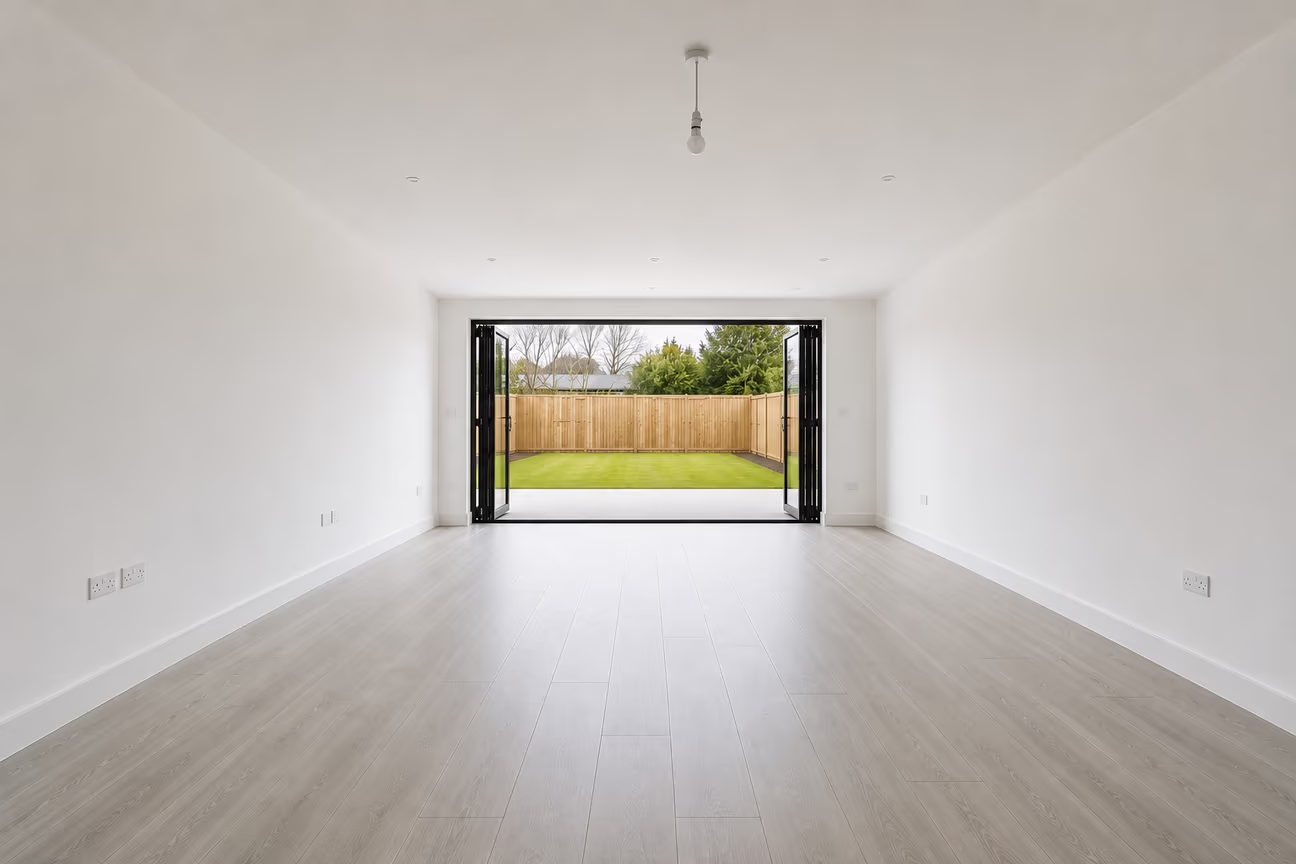
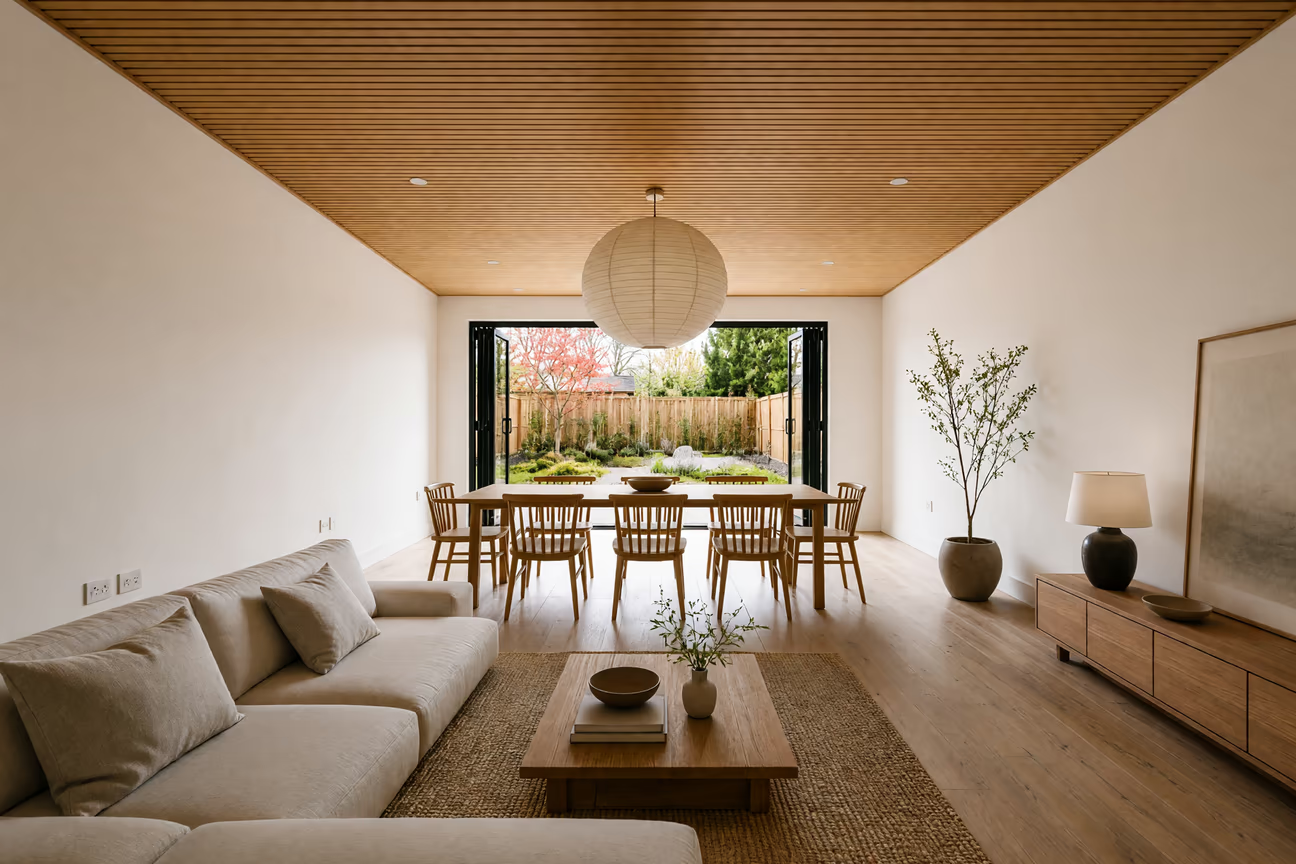
This redesign kept the bifold doors and the walls, added an oak slat ceiling, a large paper lantern, a low sofa, a closed sideboard and a dining table. It also changed the gray floor to a warmer oak and replanted the backyard outside the doors, so compare every result with your own photo.
14. Use Floor Cushions for Flexible Seating
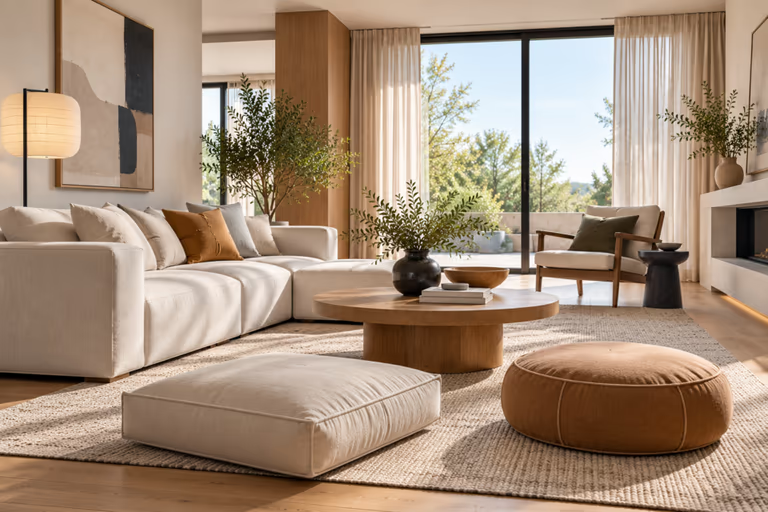
Floor cushions and low poufs offer extra seating without taking up the space of another full-size chair. Choose modern designs in cream, beige, or soft charcoal, with neat shapes and durable fabric. Keep one or two near the coffee table so they can be moved when guests arrive or tucked away when not needed.
15. Add Dark Accents for Depth
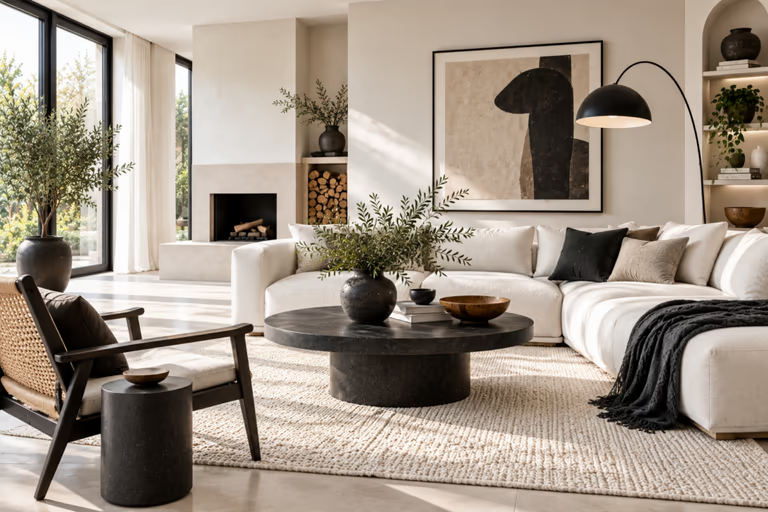
Small dark details can keep a light Japandi living room from looking flat. Try a charcoal lamp base, a black artwork frame, or a dark stone side table against cream walls and pale upholstery. Use these accents in just a few places so they add definition without making the room feel heavy.
How Do You Make a Small Living Room Japandi?
Japandi suits small living rooms because its two main moves, low furniture and empty space, make a room feel bigger. Keep the floor clear and the furniture under window height.
- Choose an apartment-size sofa, around 72 to 80 inches wide, on raised wood legs so you can see floor under it.
- Use one wall-mounted shelf instead of a tall bookcase.
- Add a round mirror opposite or beside the window to bounce light.
- Pick a nesting or round coffee table to keep walkways open.
- Keep the palette light: a warm white wall, pale oak and oatmeal linen.
See our living room layout ideas for real problems for more ways to arrange your furniture.
How Can You Get the Japandi Look on a Budget?
You do not need to buy all new furniture to give your living room a Japandi look. Start with what you have and make a few small changes.
- Reuse your existing furniture: A simple wooden table or a plain sofa may already suit the style. Move pieces around before deciding to replace them.
- Change small details first: Try neutral cushion covers, simple curtains, or a plain throw. These small updates can change the look of your room without a large expense.
- Shop secondhand: Look for wooden side tables, ceramic vases, and simple lamps at thrift stores or secondhand shops. Check each item for damage before buying it.
- Clear away extra decorations: Remove items you no longer use or enjoy. You may not need to buy anything to make the room look more open.
- Spend money where it matters: If you plan to buy something new, start with an item you use every day, such as a comfortable sofa or a good light. Add smaller decorations later.
Make one change at a time and see how it looks before spending more. A Japandi living room is about thoughtful choices, not the price of the furniture. Our living room makeover ideas for every budget has more low-cost options.
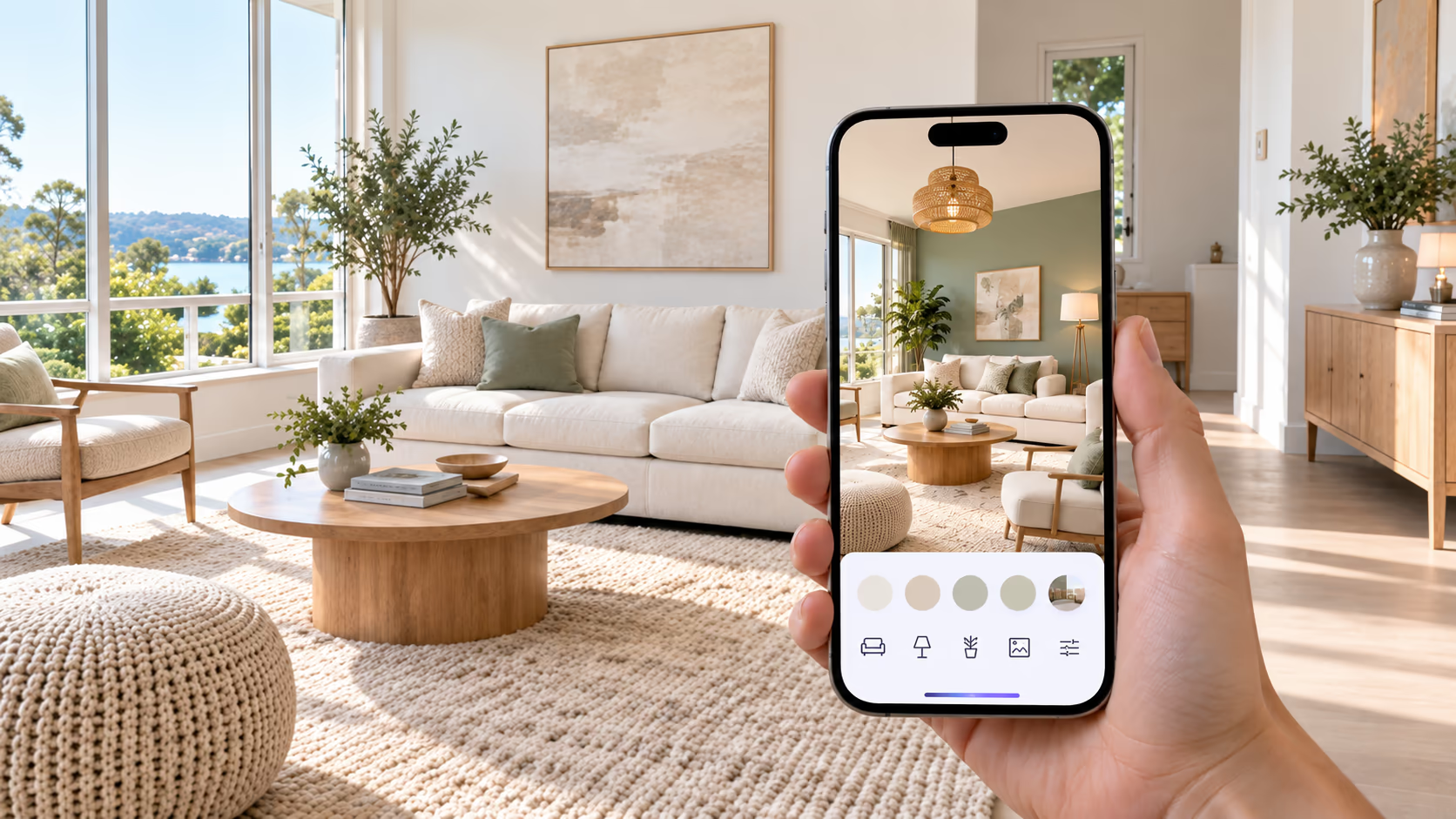
Not sure how Japandi furniture will look in your living room? Use DecorAI Room Redesign to preview design ideas with a photo of your space. Upload a room photo and test different furniture styles, colors, and layouts. Compare the results to see which look suits your room before you buy anything.
What Are the Most Common Japandi Living Room Mistakes?
The most common mistakes are too much beige, too much decor, and treating Japandi as a Japan theme.
1. Going All Beige
One homeowner on Reddit said their Japandi room "slowly morphed into a beige room with no personality" (r/interiordecorating). The top replies suggested using a solid wood coffee table, adding a paper lampshade, and putting away small decorations.
2. Theme Decor
Decorating with Buddha statues, lucky cats, folding fans, or fake cherry blossoms can make the room look themed. Instead, use Japandi ideas in your furniture, colors, and materials.
3. Matching Decor Sets
Three matching vases can make a room feel too planned. Choose one handmade vase or a few pieces with different shapes.
4. Fake Wood
Shiny wood-look surfaces may look less natural. If your budget allows, choose one real wood piece, such as a coffee table or side table.
5. Cold, Bright Overhead Light
Bright white ceiling lights can make a room feel harsh. Add warm table lamps or floor lamps for softer light.
6. Filling Every Surface
Too many items on shelves and tables can make the room look crowded. Put away decorations you do not need and leave some surfaces clear.
How Can You Try Japandi in Your Own Living Room?
Inspiration photos show other people's rooms, but your windows, floor and sofa are different. With AI room design you upload a photo of your living room, pick Japandi from 54 interior styles, and get up to 4 designs in about 30 seconds. The tool keeps your walls, windows and doors in place.
- Upload a photo: Stand in a corner and shoot in daylight for the best result.
- Choose a design style: Select Japandi to see this look. You can also compare it with Scandinavian or Minimalist from the same photo.
- Keep or remove your furniture: Keep what you have, or start from an empty room.
- Compare the results and keep the one that fits.
- Edit one area: Magic Edit changes a selected area from a short text prompt, such as adding a paper lamp, and Erase Object removes things like the clutter on a shelf.
The result is a picture, not a measured plan, so measure your room before you order a sofa. A free 1-day trial includes 3 designs. A card is needed, nothing is charged during the trial, and you can cancel at no cost. See pricing for plans.
For more examples, Explore Japandi Designs or browse all living room designs.
Frequently asked questions
Japandi living rooms use warm white, greige, sand, and earthy tones with natural wood. Add muted green, rust, or charcoal accents for contrast.
No. Japandi remains popular for its simple design, natural materials, and uncluttered look. Its mix of Japanese and Scandinavian styles gives it a timeless feel.
Japandi doesn't have to be expensive. Start by clearing clutter and using warm wall colors. Then add a few simple pieces and look for affordable secondhand wooden furniture.
Choose a simple, comfortable sofa in cream, oatmeal, or sand, with clean lines and natural fabric. A wooden base adds warmth, but a standard-height sofa works just as well.
Yes. Place it above a long, low wood console with closed doors, hide the cables, and keep the wall around it bare so the screen reads as a calm dark panel.
Scandinavian style feels bright and cozy, with pale wood and soft fabrics. Japandi blends that look with Japanese simplicity, darker wood, handmade pieces, and more open space.
Sources
- Danish Architecture Center, "Japan and Scandinavia found each other long before we learned to call it Japandi"
- BBC Future, "The rise of Japandi style" (2019)
- Reddit, r/interiordecorating, "Attempt at Japandi living room gone wrong"
- Architectural Digest, "Japandi Style: Everything You Need to Know"