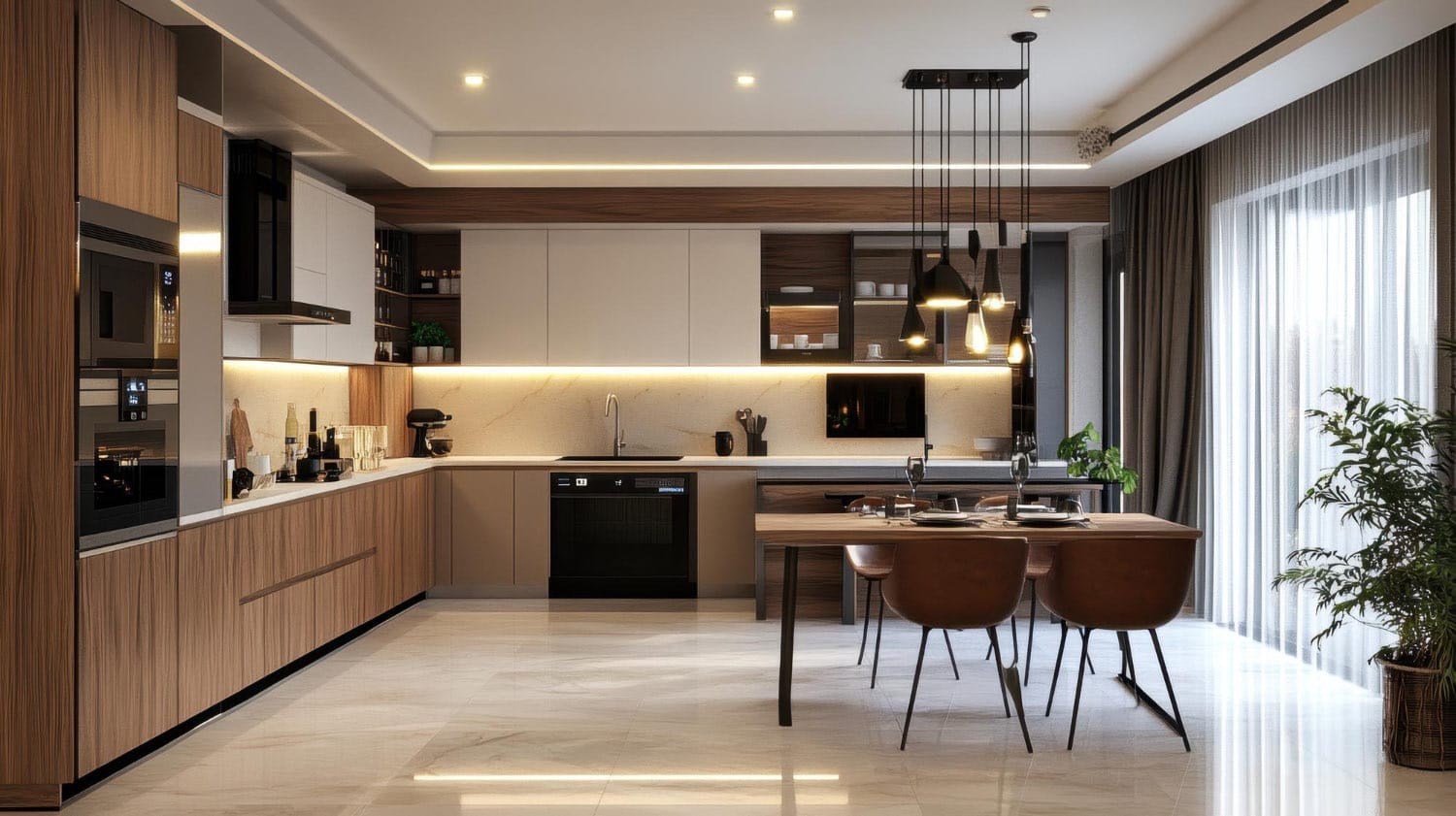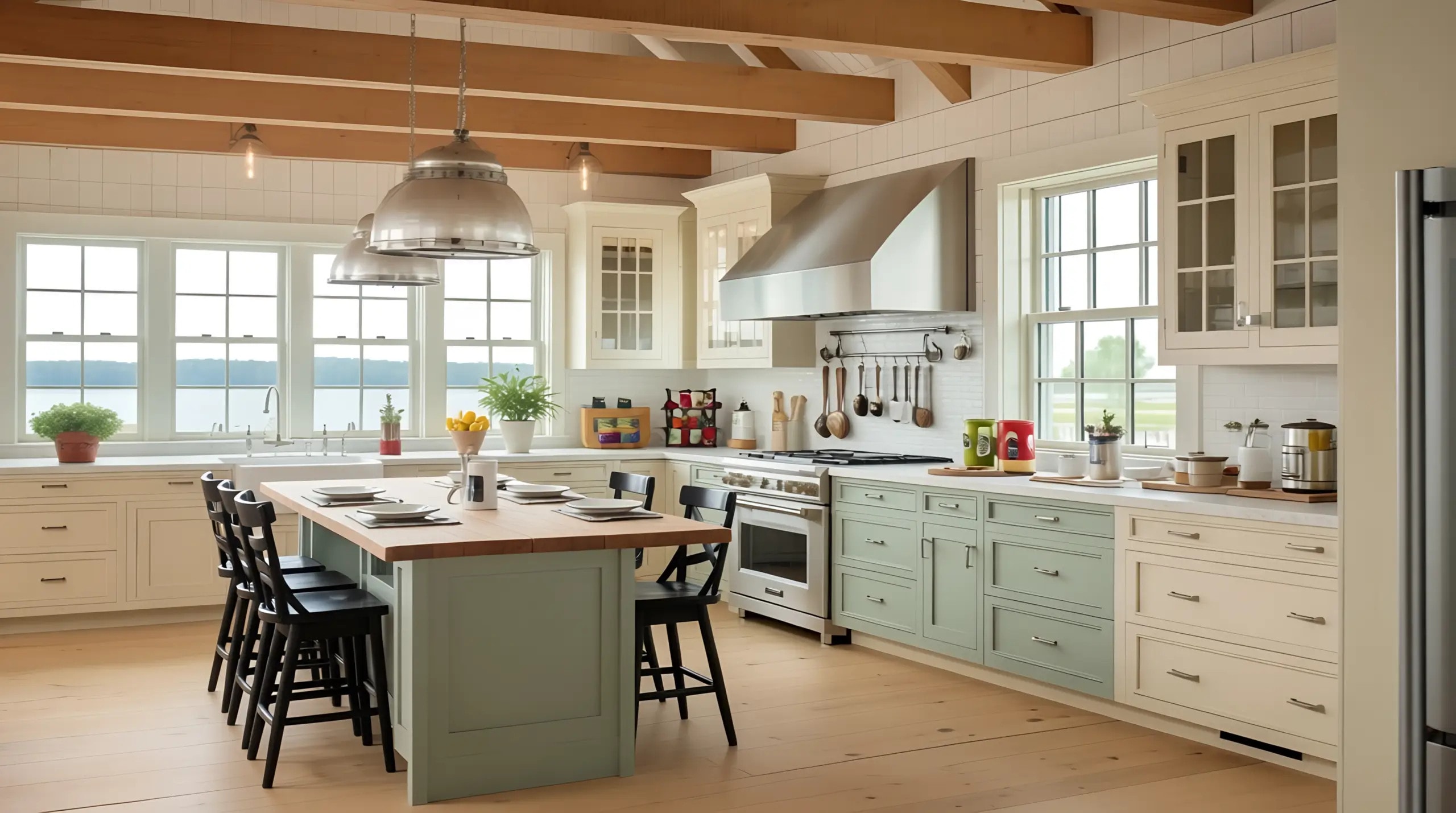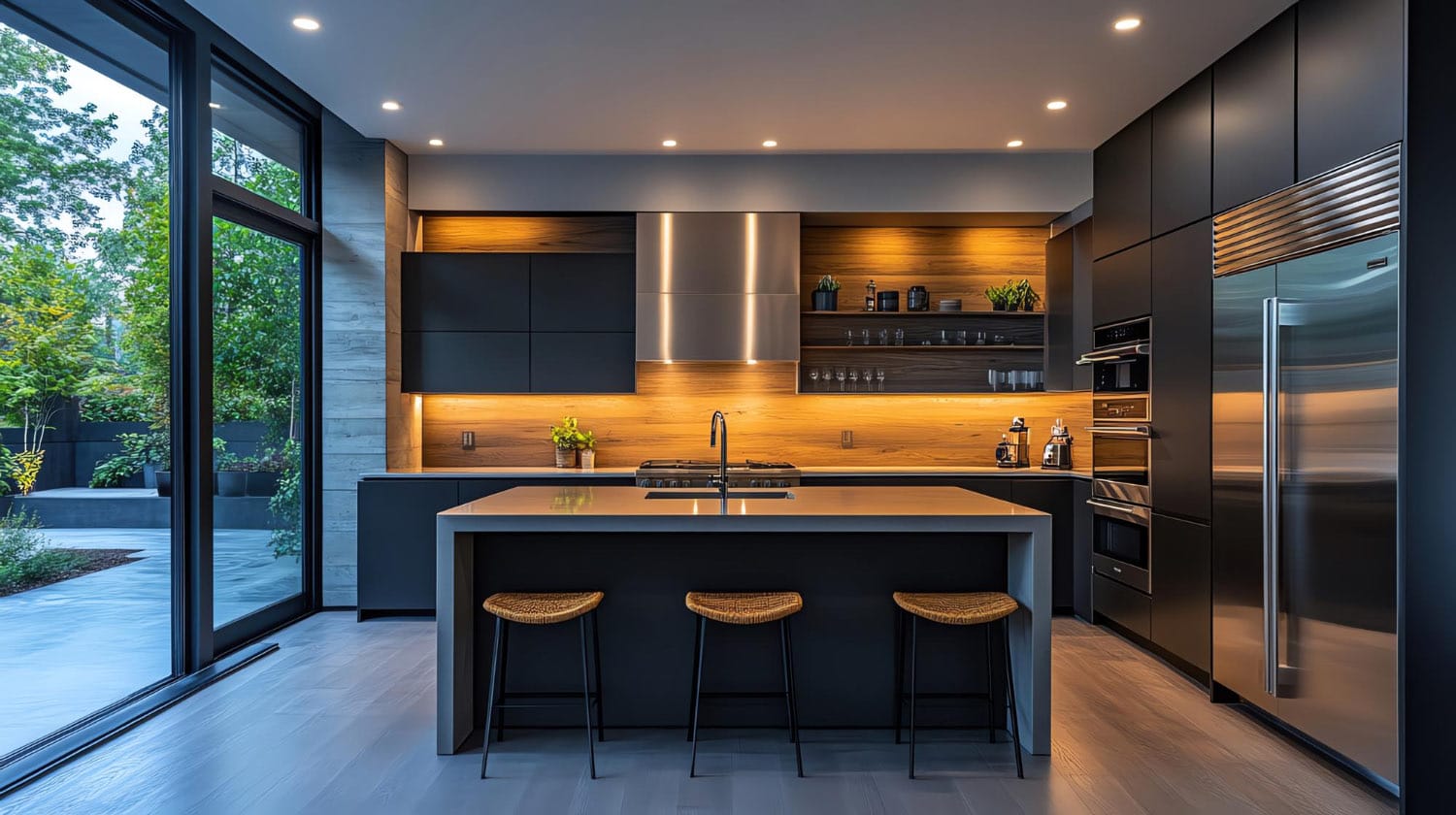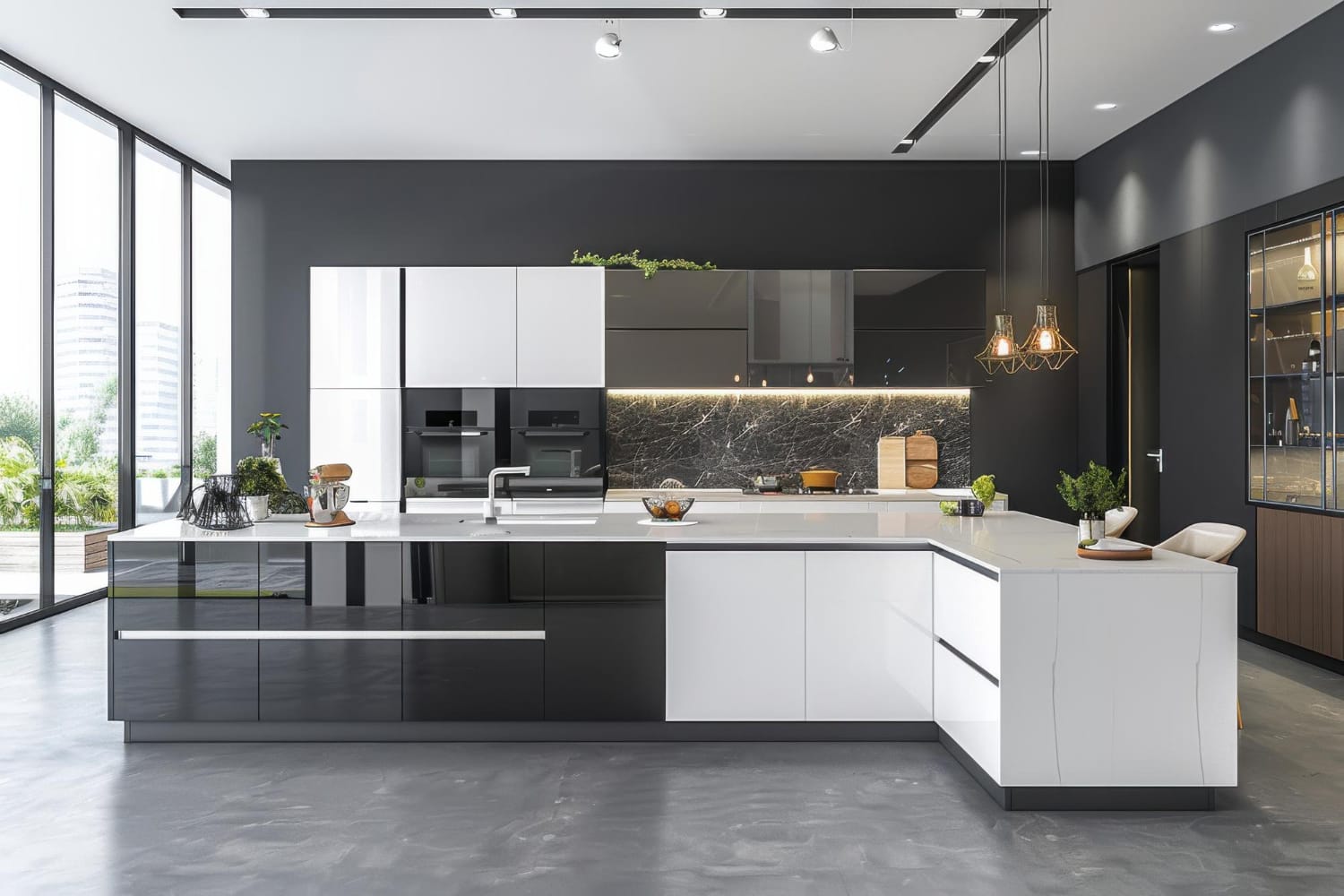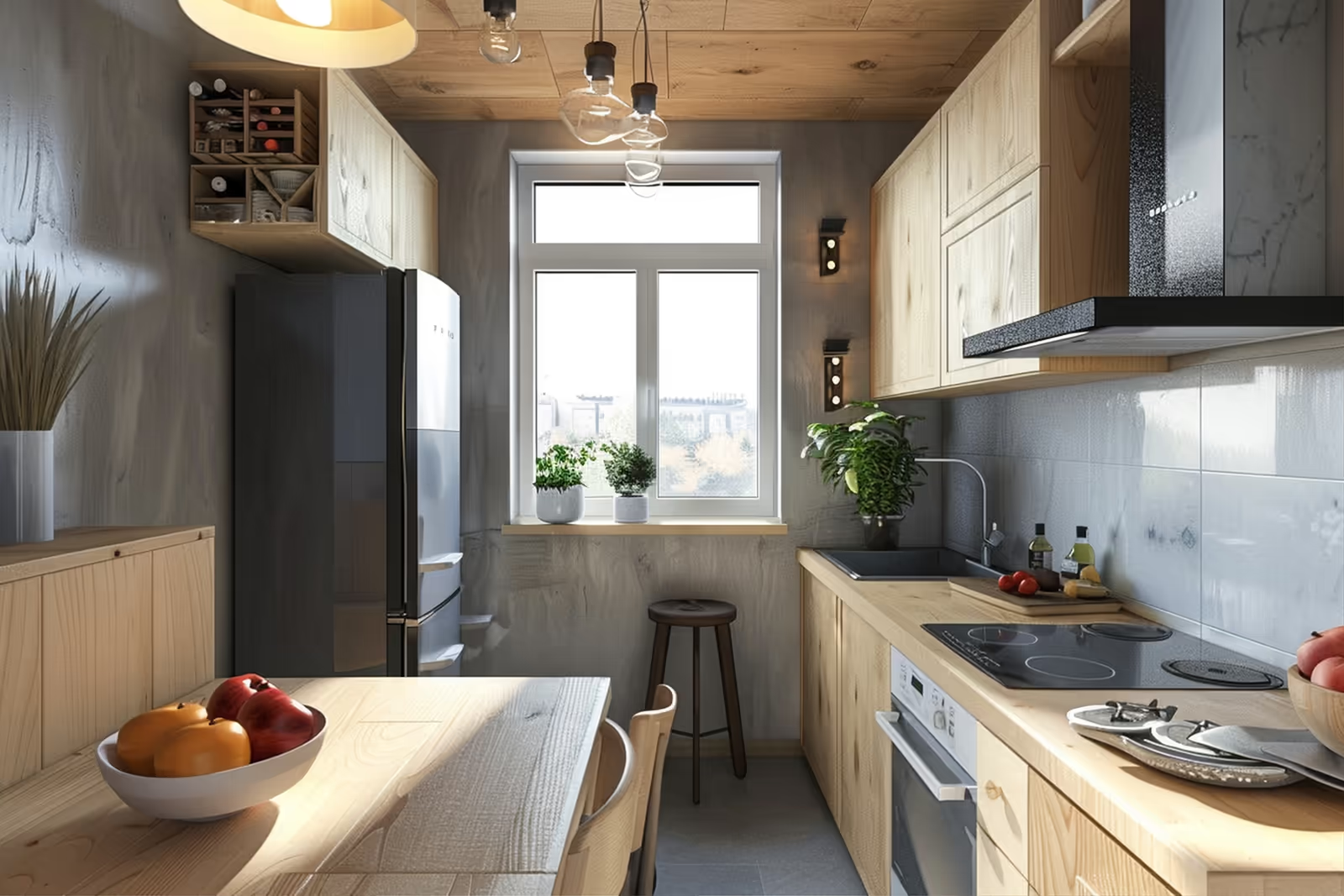
Small kitchens are not a design problem. They are a design opportunity that most people approach the wrong way. The instinct is to look for more space. The better move is to make the existing space work harder. These 9 before-and-after small kitchen design ideas show exactly what that looks like in practice, each one generated with DecorAI’s Kitchen Redesign tool, so the transformation is visual, specific, and real.
For a broader look at kitchen styles and layouts beyond compact spaces, the kitchen design ideas guide covers every direction in one place.
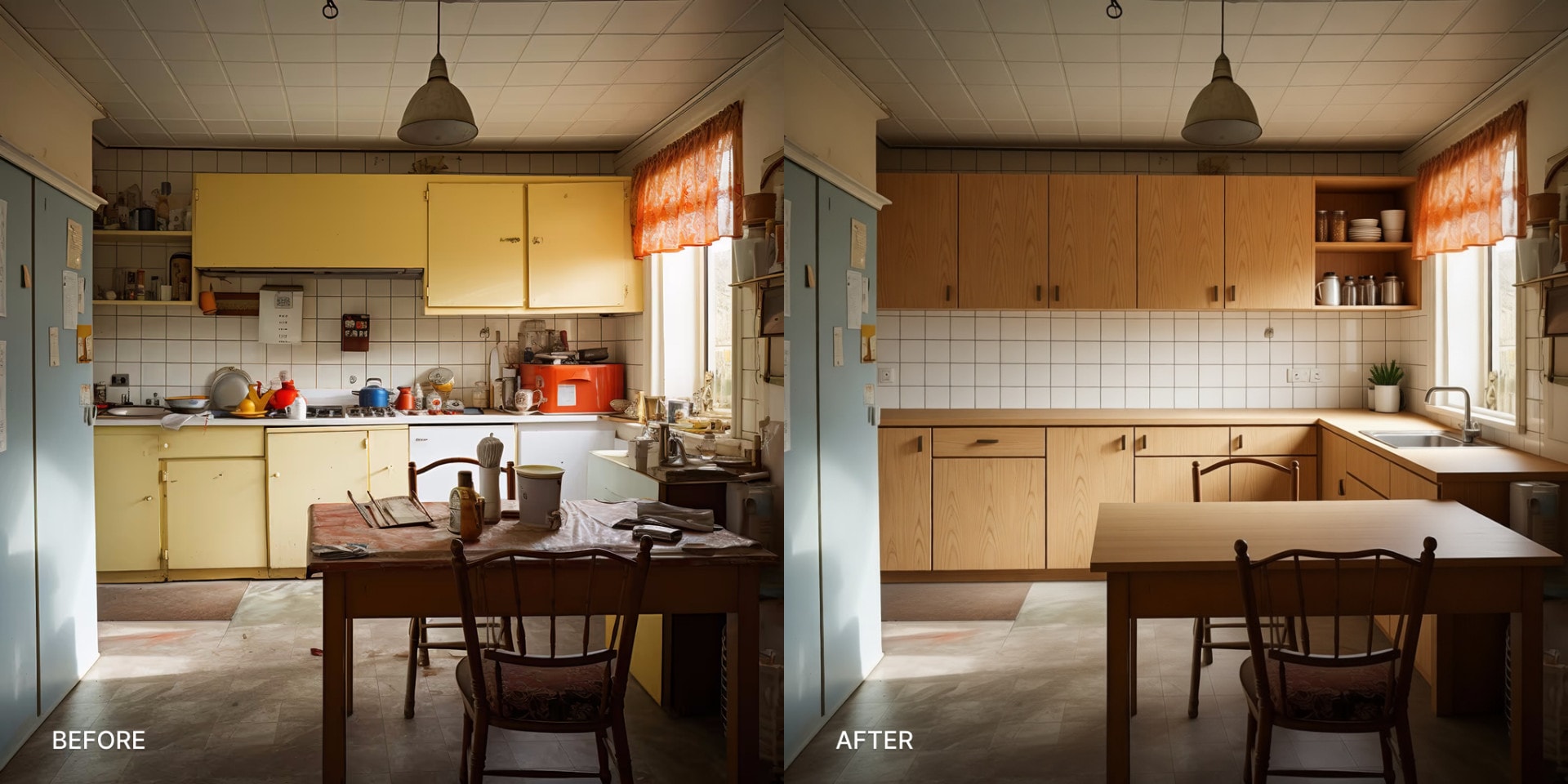
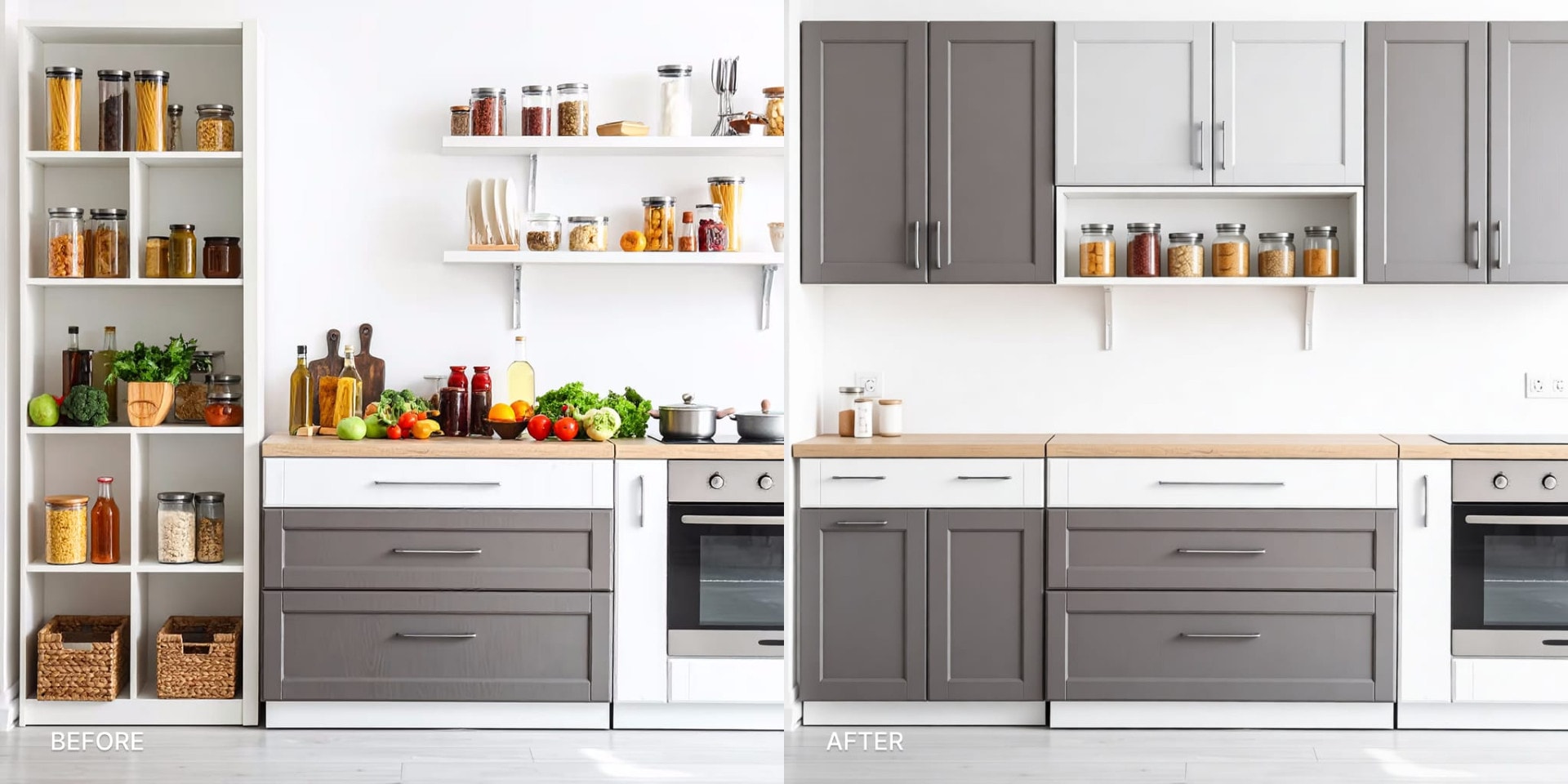
Idea 1: Go Light on the Upper Cabinets of the Small Kitchens
Dark upper cabinets in a small kitchen push the walls visually inward. Switching to a light tone or natural wood finish on the uppers, while keeping a deeper color on the lowers, immediately changes how the room reads. The eye travels upward, and the ceiling feels higher. In the transformation above, the change is purely cosmetic: same layout, same footprint, different cabinet color distribution. The result reads as a completely different small kitchen design.
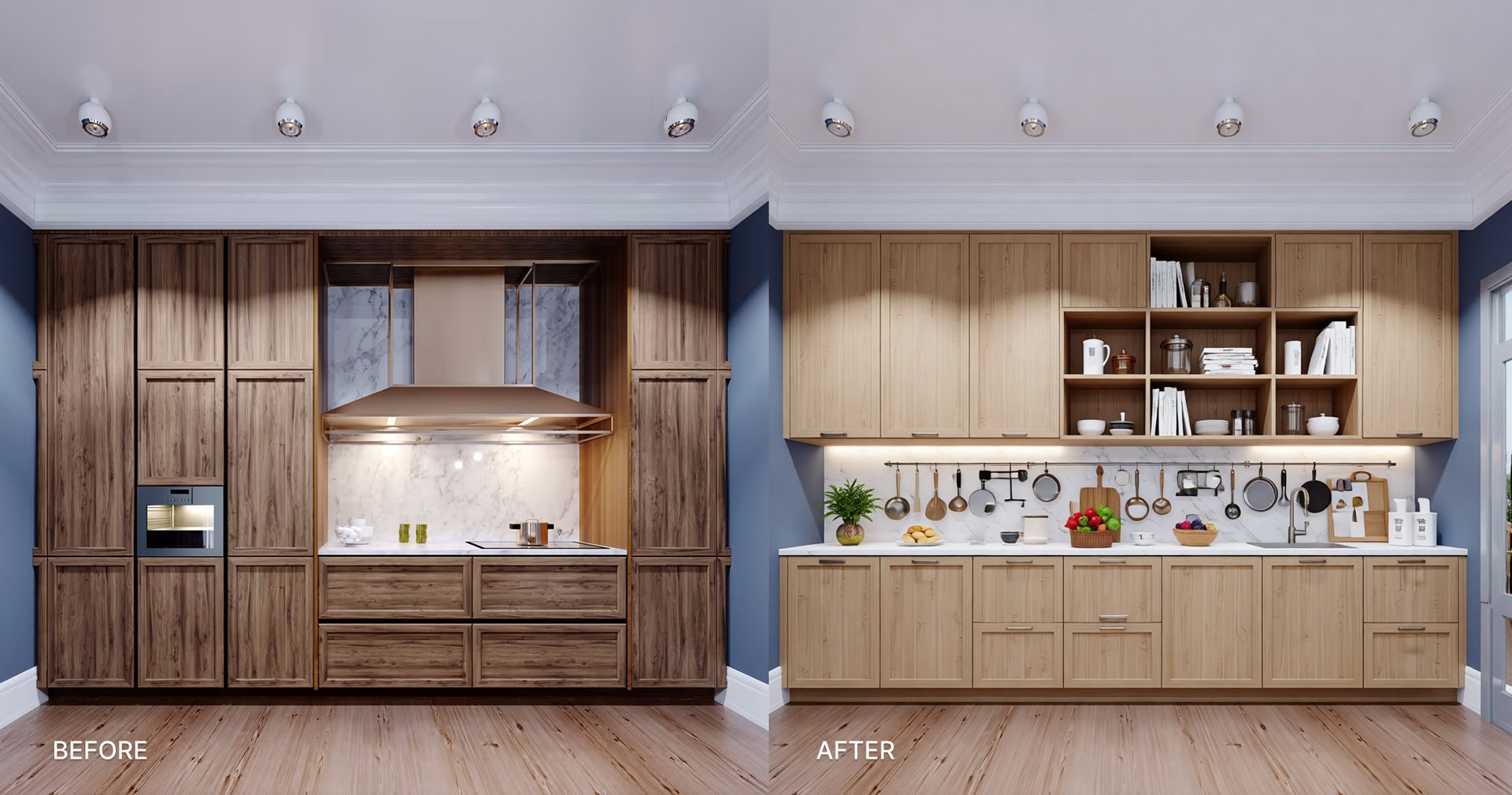
What changed: Cabinet color switched from dark to light oak flat-panel. One section was replaced with open shelving to break the visual weight further. (No structural changes required)
Idea 2: Clear Counters in Small Kitchens
Every appliance left on the counter in a small kitchen costs visual space. A toaster takes up roughly 14 inches. A coffee maker takes another 12. Move anything used less than daily into a cabinet, and the counter reads as dramatically more generous, even though nothing structural has changed. This is the highest-impact, lowest-cost change available in any compact small kitchen design.
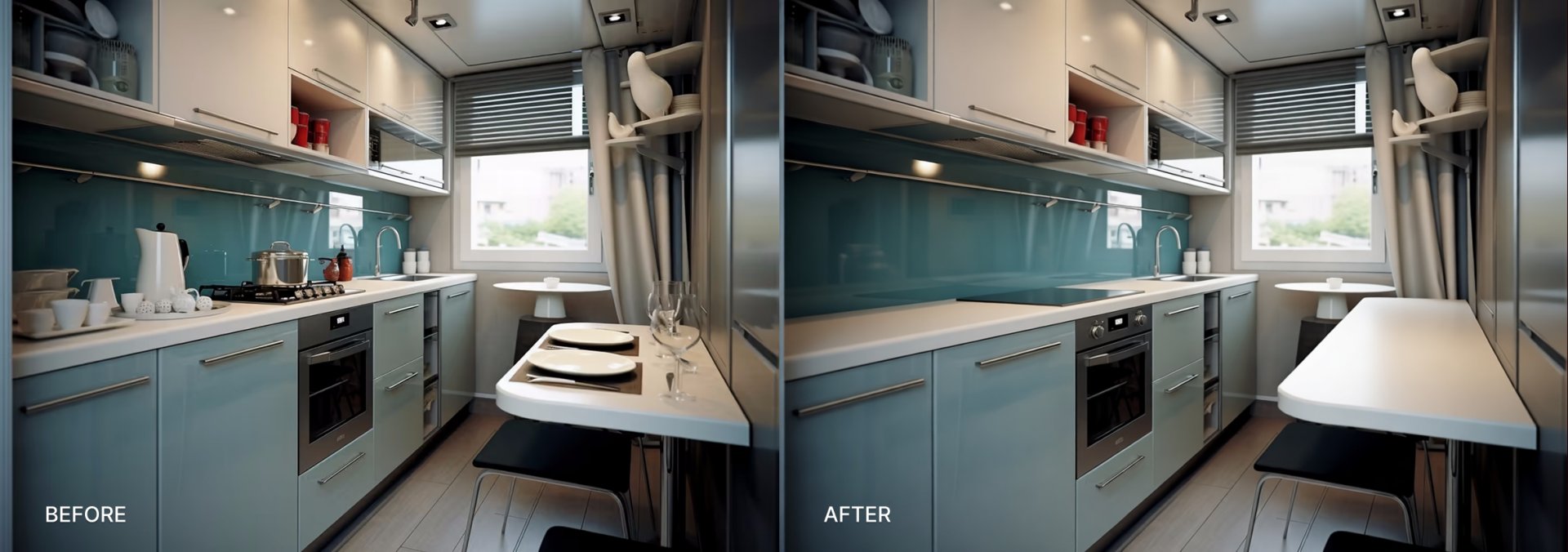
What changed: Counters cleared of appliances. An appliance garage cabinet was added at one end to house small appliances out of sight. (No structural changes required)
Idea 3: Floor-to-Ceiling Cabinets for Small Kitchen Storage
In a small kitchen, floor space is fixed. Vertical space rarely is. Floor-to-ceiling cabinets make use of the full wall height, draw the eye upward, and add significant storage capacity without expanding the footprint by a single inch. The transformation below shows the difference between standard-height upper cabinets with a dead soffit above and floor-to-ceiling units in the same space.
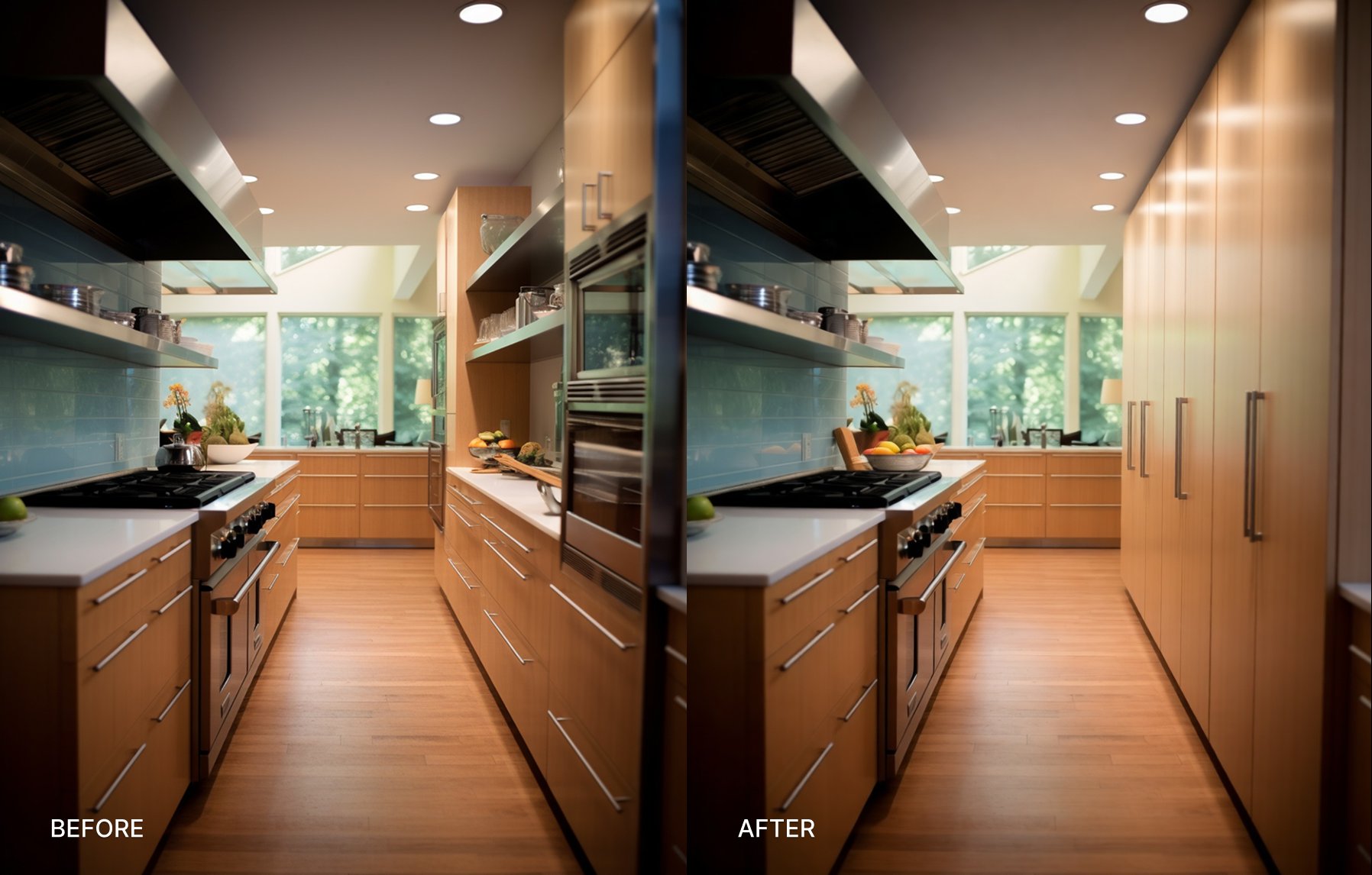
What changed: Standard upper cabinets replaced with floor-to-ceiling units. Soffit filled. Cabinet color was kept light to prevent the taller units from feeling heavy. (No structural changes required)
Idea 4: Use Light to Open the Space in a Small Kitchen Makeover
Natural light is the most powerful tool in small kitchen design, but it can be amplified even when window placement is fixed. A reflective backsplash material, pale cabinet colors, and under-cabinet lighting all bounce light around the room, making a dark, narrow kitchen feel significantly more open. According to Homes and Gardens’ small kitchen trend coverage for 2026, reflective backsplash materials are one of the most impactful small-space design moves this year.
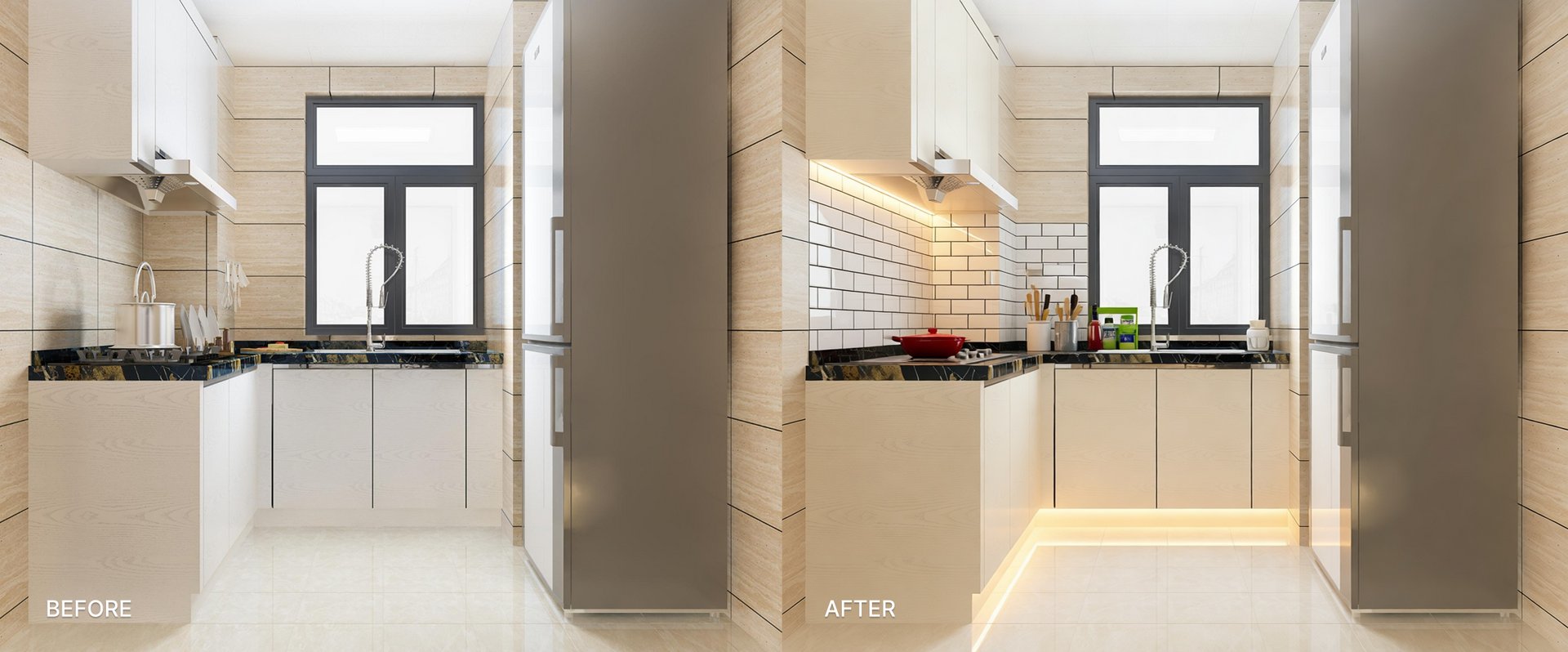
What changed: Backsplash switched to a glossy subway tile. Under-cabinet lighting added. The footprint is identical. (No structural changes required)
Idea 5: Try Two-Tone Cabinets in Small Kitchen Design
Single-color cabinetry throughout a small kitchen can feel flat and undifferentiated. A two-tone approach, darker lower cabinets and lighter uppers, adds depth and visual interest without adding complexity. It also grounds the space: the heavier color sits at floor level where it belongs, and the lighter tone above keeps the ceiling feeling open. This works in almost every small kitchen style direction.
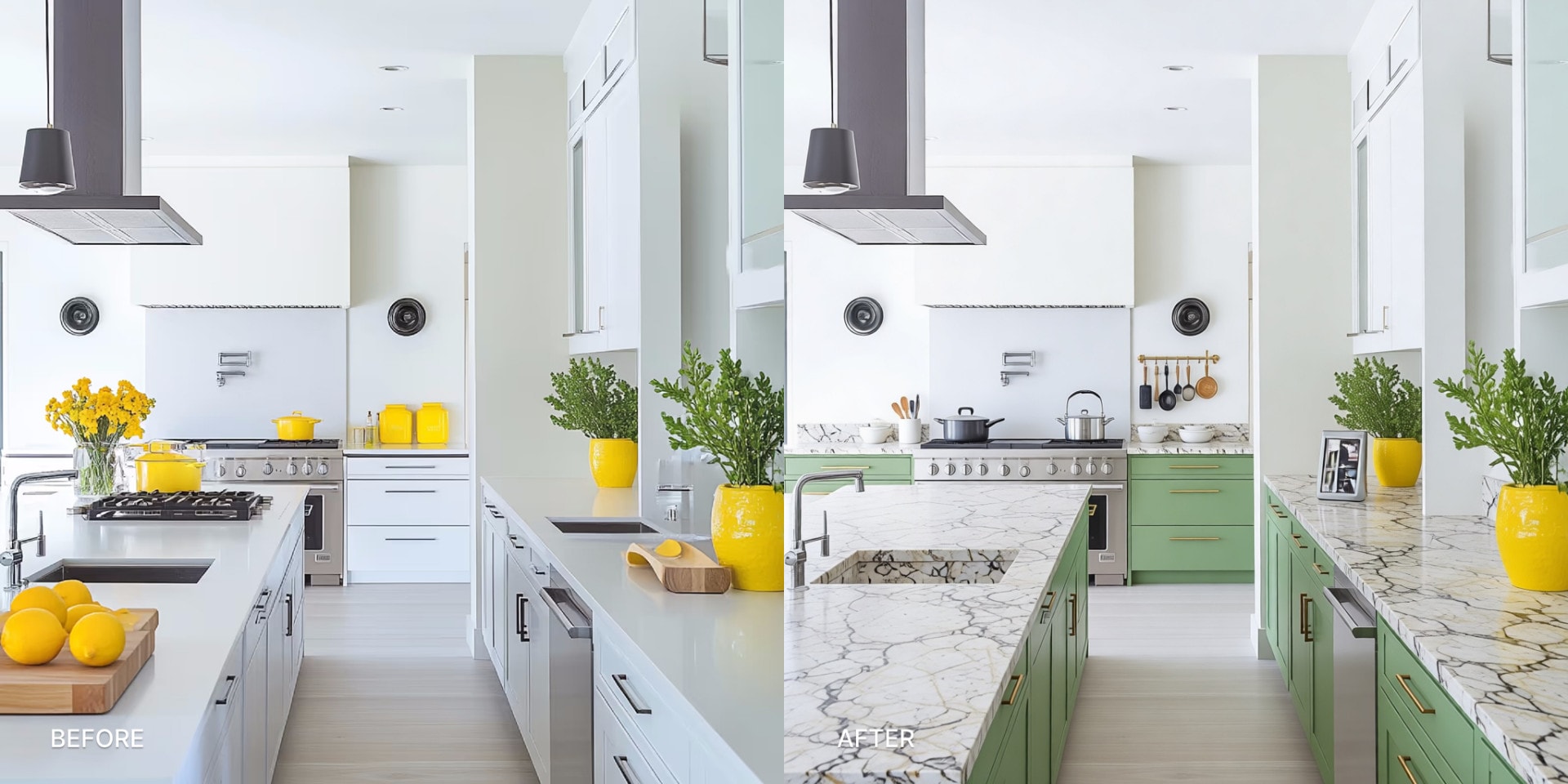
What changed: Lower cabinets repainted to sage green. Hardware updated to brushed brass. Upper cabinets kept white. The structure is unchanged; the character is completely different. (No structural changes required)
Idea 6: Add Flexible Prep Space in Your Small Kitchen
One of the most common frustrations in small kitchens is limited counter space for prep work. A permanent island is often not an option due to clearance constraints, but a rolling island or slim peninsula solves the problem without the commitment. It can be positioned for cooking and moved aside for cleaning or entertaining. The before/after below shows what a compact peninsula addition looks like in a small L-shaped kitchen.
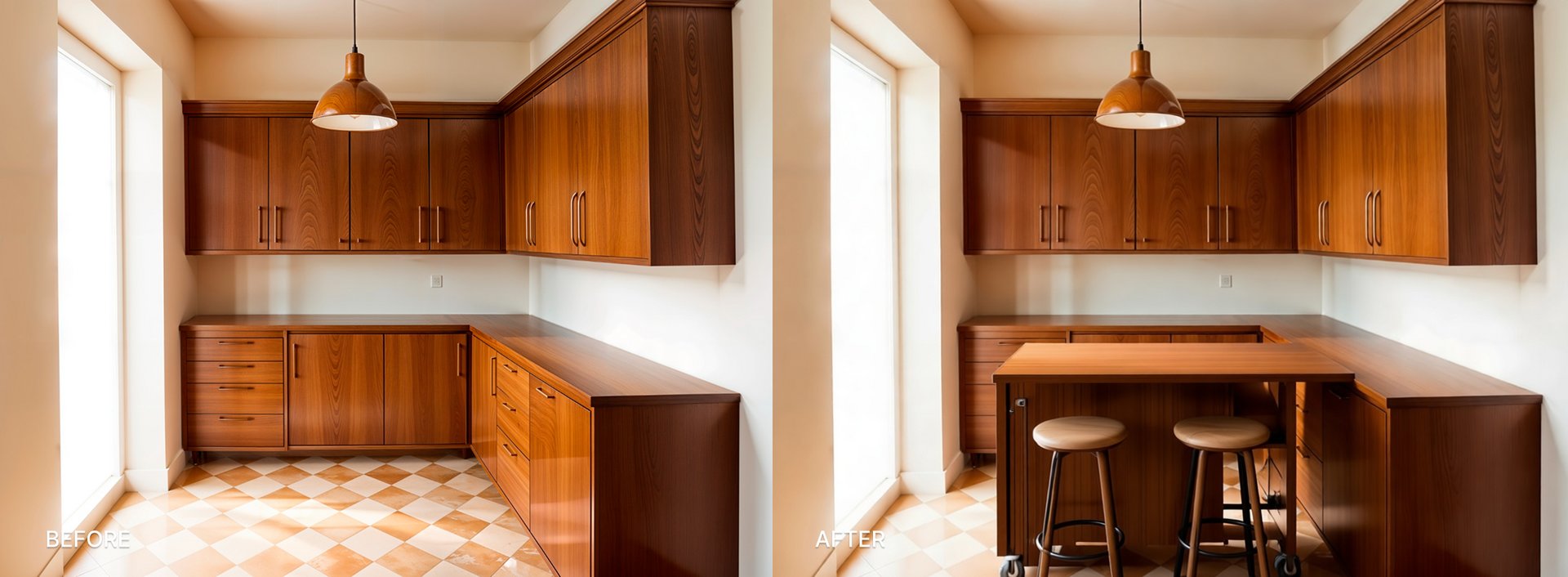
What changed: A rolling island was added in the center. Sized to leave 42 inches of clearance on all sides. Matches the lower cabinet tone for a cohesive result. (No structural changes required)
For full guidance on layout planning in small kitchens, the how to design a kitchen guide covers the layout decision process in detail.
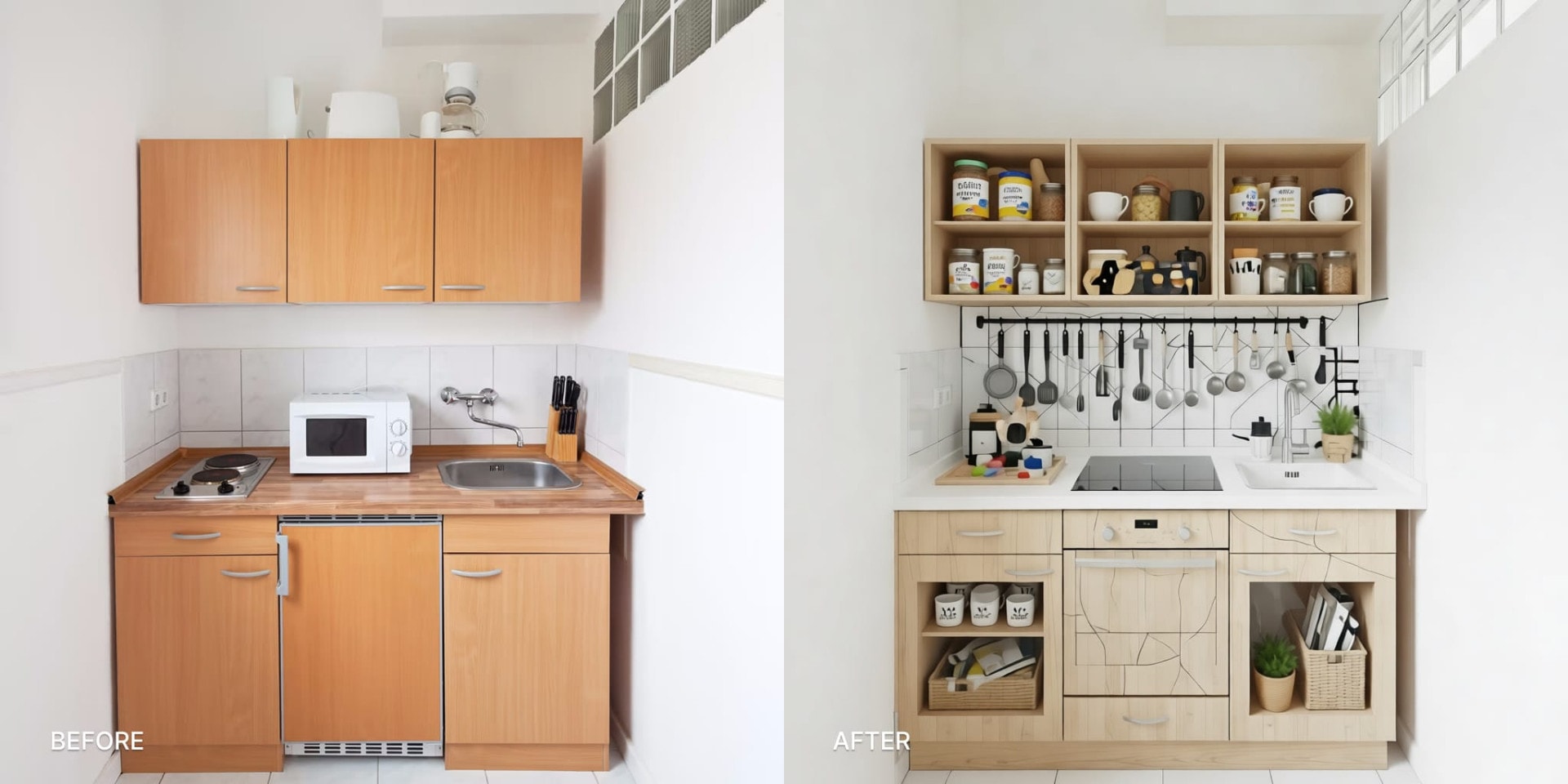
Idea 7: Balance Open and Closed Storage
All-open shelving in a small kitchen looks clean in photographs, but requires constant maintenance to stay that way. In daily use, it becomes a source of visual clutter. The more practical approach is to use open shelving selectively: one or two sections where you display the things worth showing (ceramics, a few well-chosen jars, a plant) and closed cabinets everywhere else. The contrast between open and closed also adds visual rhythm to a small kitchen that all-closed storage cannot.
What changed: Most open shelving was replaced with closed upper cabinets. One central section kept open and styled simply. (No structural changes required)
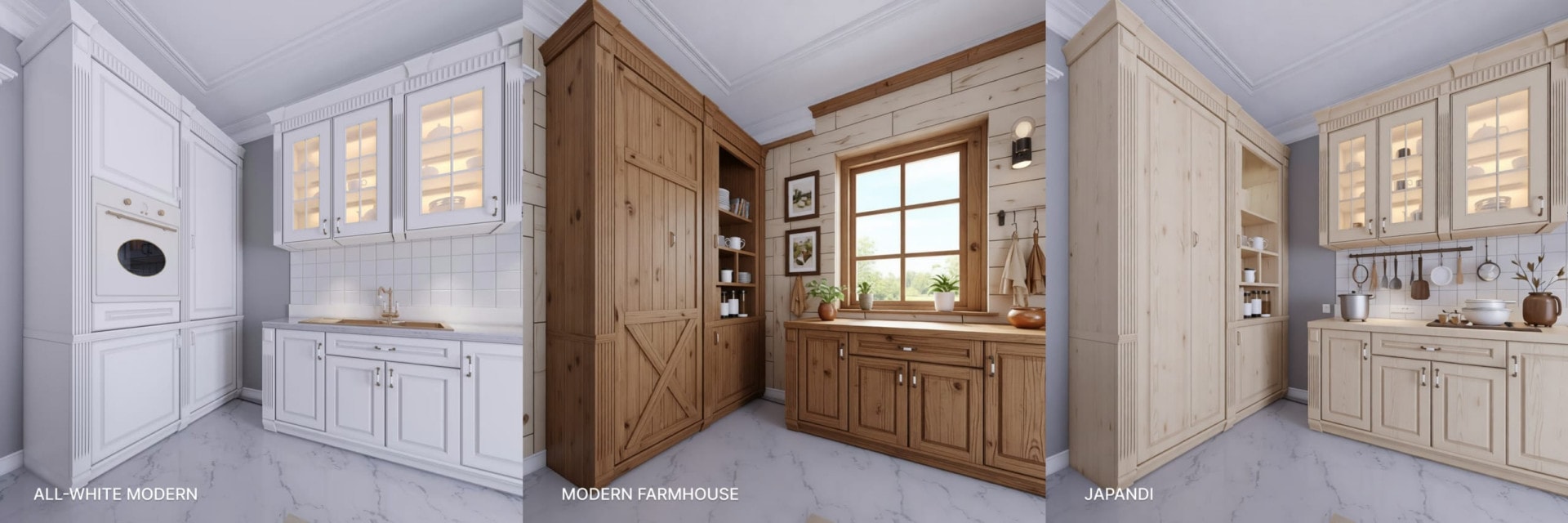
Idea 8: Small Kitchen Design in Japandi Style Direction
Small kitchen design’s benefit enormously from a committed style direction. Without one, compact spaces tend to accumulate a mix of elements that compete visually and make the room feel even smaller. Japandi, the blend of Japanese minimalism and Scandinavian warmth, is one of the strongest style choices for small kitchens: its principles of restraint, natural materials, and calm palette align exactly with what a small space needs. Light wood, warm neutrals, matte ceramic tile, and nothing on the counter that does not earn its place.
What changed: Cabinet profile updated to flat-panel in light wood veneer. Backsplash replaced with a terracotta handmade tile. Hardware unified in matte black. Every counter item is removed. (No structural changes required)
Idea 9: Small Kitchen Design with Warm Modern Style
Where Japandi reads as quiet and minimal, warm modern reads as confident and residential. The same small kitchen footprint can carry a completely different personality depending on which style direction you apply. Warm modern in a small kitchen means flat-panel cabinets in a muted earthy tone, warm lighting, natural stone or quartz countertops, and brass or warm nickel hardware. It feels generous and deliberate rather than compact and compromised. The layered lighting approach used in the Lutron lighting guide applies well here: ambient, task, and a small accent moment all working together in a tight space. Try it in your own kitchen and see which direction actually works in your space.
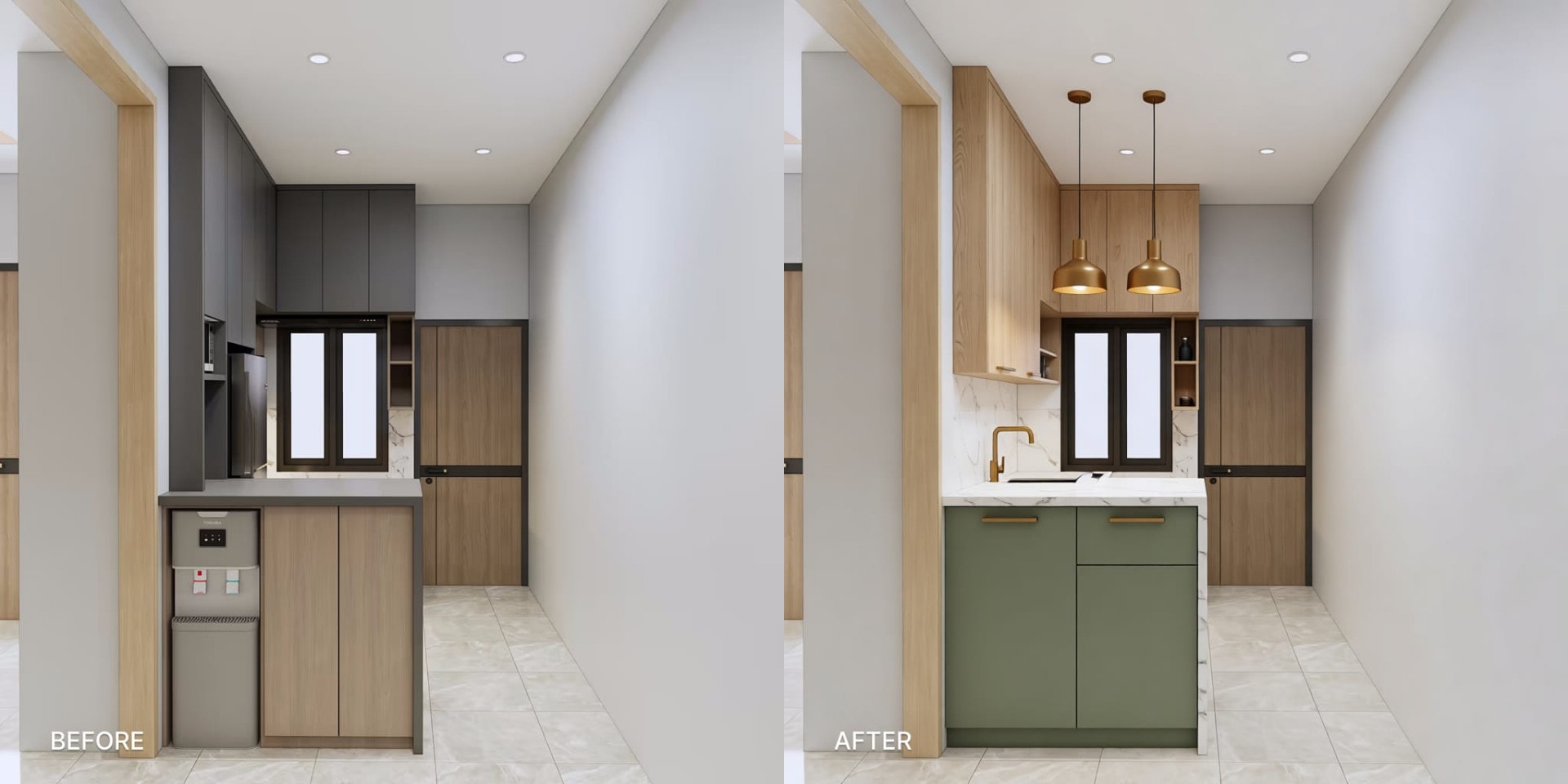
What changed: Lower cabinets updated to sage, uppers to natural oak. Hardware changed to brushed brass. A warm pendant was added. Under-cabinet strip lighting installed for the task layer. (No structural changes required)
See Your Small Kitchen Redesigned With AI
The most useful thing about the transformations in this article is not the ideas themselves. It’s the fact that each one was generated in seconds using a photo of an existing kitchen. You do not need to imagine how your small kitchen would look with sage green cabinets or a Japandi backsplash. You can see it in your actual space, before making a single decision.
DecorAI’s Kitchen Redesign tool works in three steps: upload a photo of your current kitchen, choose a style or describe what you want in Pro mode, and generate up to four photorealistic variations in seconds. You see the result before spending anything or committing to anything.
See your Small Kitchen space redesigned with DecorAI?
Upload one photo. See your space redesigned in seconds.
No design experience needed.
FAQ About Small Kitchen Design
What is the best design for a small kitchen?
The best small kitchen design combines a tight, efficient layout (galley or L-shaped) with light colors that reflect natural light, floor-to-ceiling cabinets that maximize vertical storage, and cleared counters that give the space visual breathing room. Style matters too: Japandi, warm modern, and simple farmhouse directions all apply beautifully to compact footprints without overwhelming them.
How do I design a small kitchen layout?
A galley layout (two parallel walls) or an L-shaped layout (two adjacent walls) is the most efficient option for small kitchens. Both keep the work triangle tight and leave the remaining floor plan open. Avoid forcing a permanent island unless you have at least 42 inches of clearance on all sides. A rolling island or slim peninsula gives extra prep space that can be moved when not needed.
How do I make a small kitchen look bigger?
Use light cabinet colors to reflect natural light. Install floor-to-ceiling cabinets to draw the eye upward. Clear counters of appliances used less than daily. Add a reflective backsplash to bounce light around the room. Keep the color palette simple: one or two tones rather than multiple competing colors. Consistent flooring throughout without rugs or borders also helps the space read as larger.
How do I design a small galley kitchen?
Keep one wall lighter than the other to create depth. Remove or limit upper cabinets on one wall to prevent the tunnel effect. Run the same flooring straight through without interruption. Integrate appliances where possible to reduce visual noise along the cabinet lines. A window at one end brings natural light through the full length of the galley, and makes the layout feel significantly more open.