Most kitchen renovations start with an inspired scroll through photos and end with expensive regret. You fall in love with a magazine-spread style, spend weeks planning, and realize halfway through that it just doesn’t fit your home’s footprint.
This guide cuts through that. It covers 30+ kitchen design ideas organized by layout and style, including galley, island, modular, outdoor, and more, so you can find what fits your specific space before committing to anything. And because every style looks different in your actual kitchen, we’ll show you how to preview your transformation before you touch a single cabinet.
Kitchen Design Styles for 2026: Which One Fits Your Home
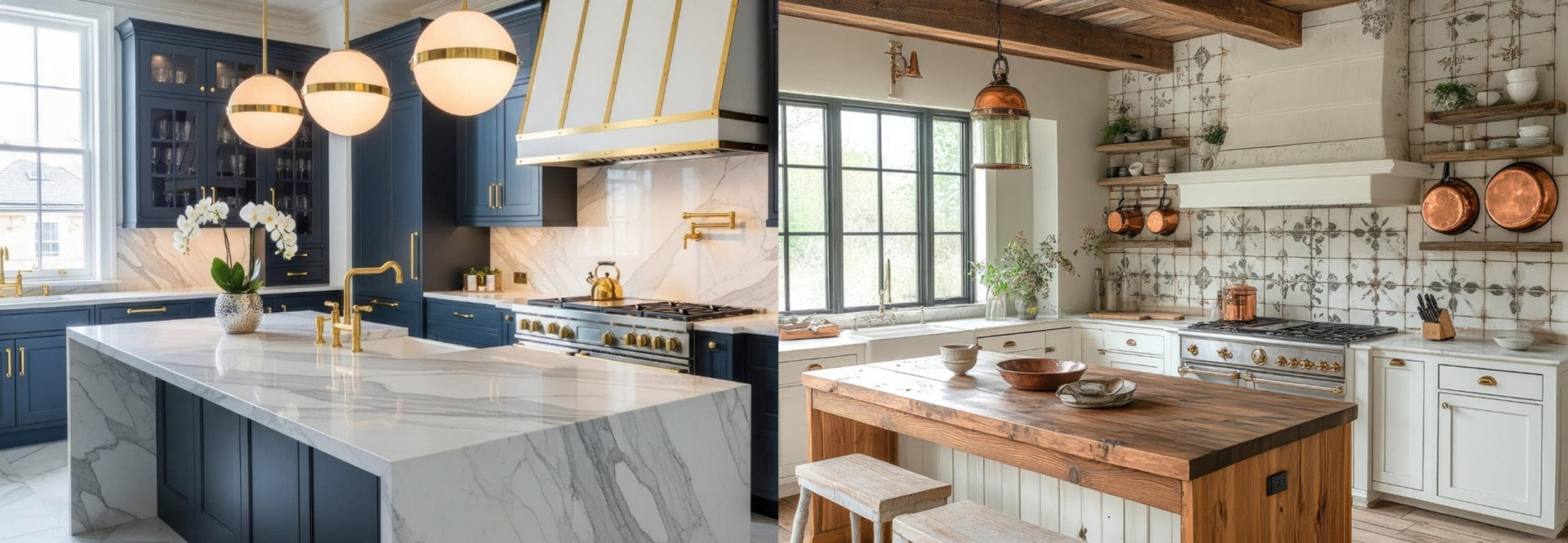
Before choosing a layout or picking cabinet colors, it’s essential to identify the style that fits how you actually live. Here are the six most popular kitchen design styles right now, and what makes each one work.
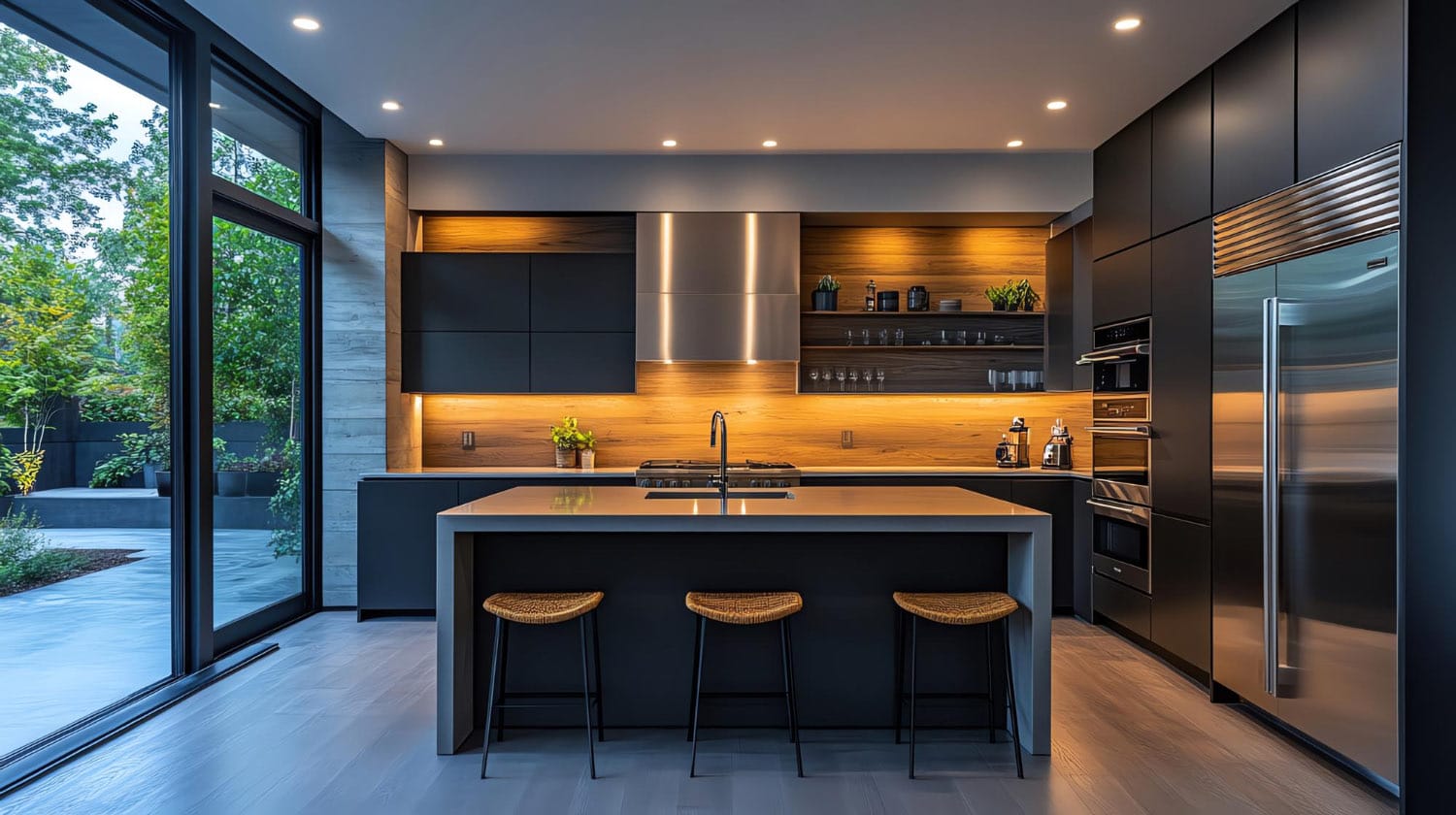
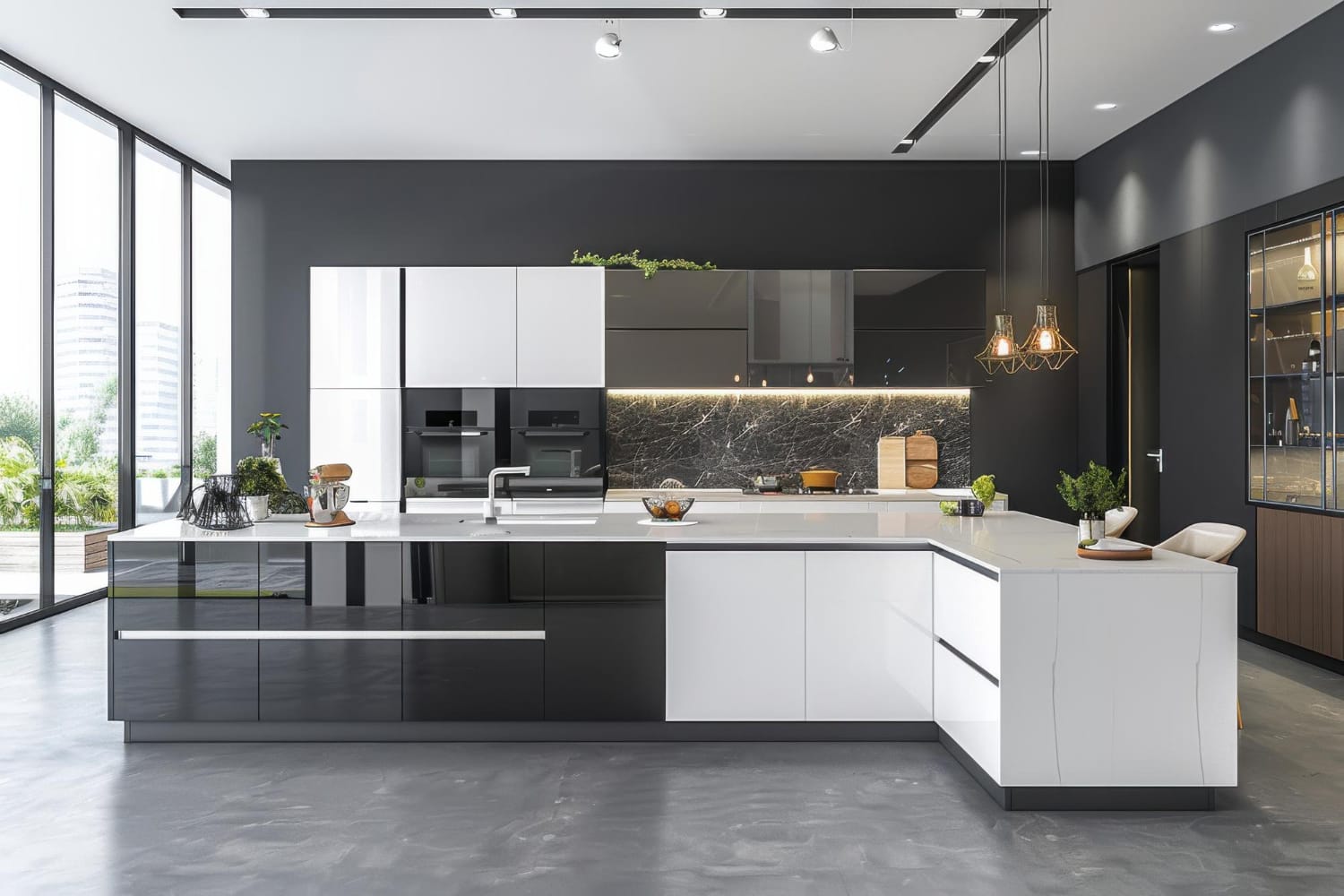
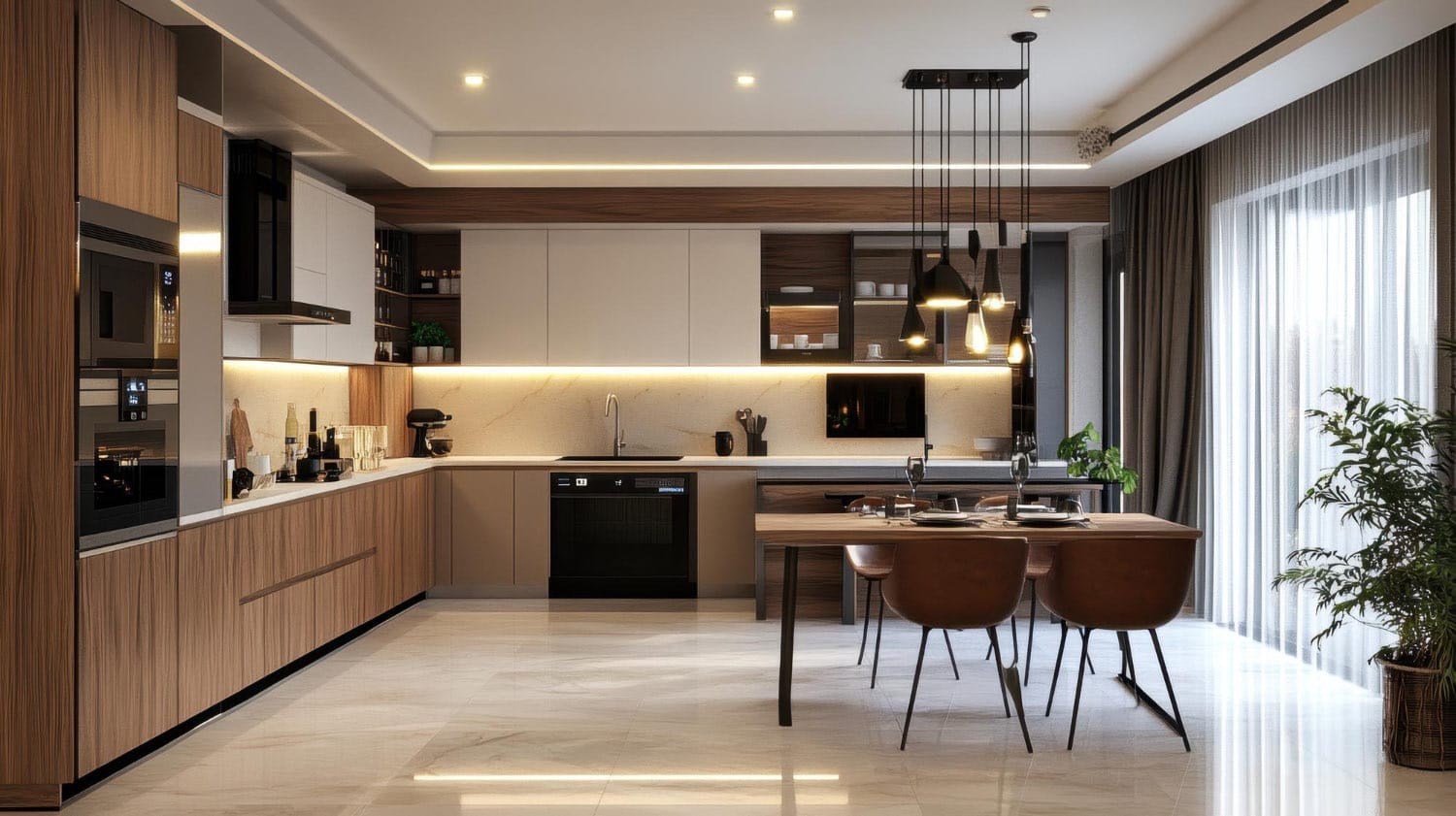
- Modern: Sleek and minimal. Features flat-panel cabinets, handleless doors, and a cool palette of whites, grays, and matte blacks. This style prioritizes a high-tech aesthetic and integrated appliances to create a seamless, uninterrupted look. It is the ideal choice for those who want a futuristic feel that emphasizes order and industrial precision.
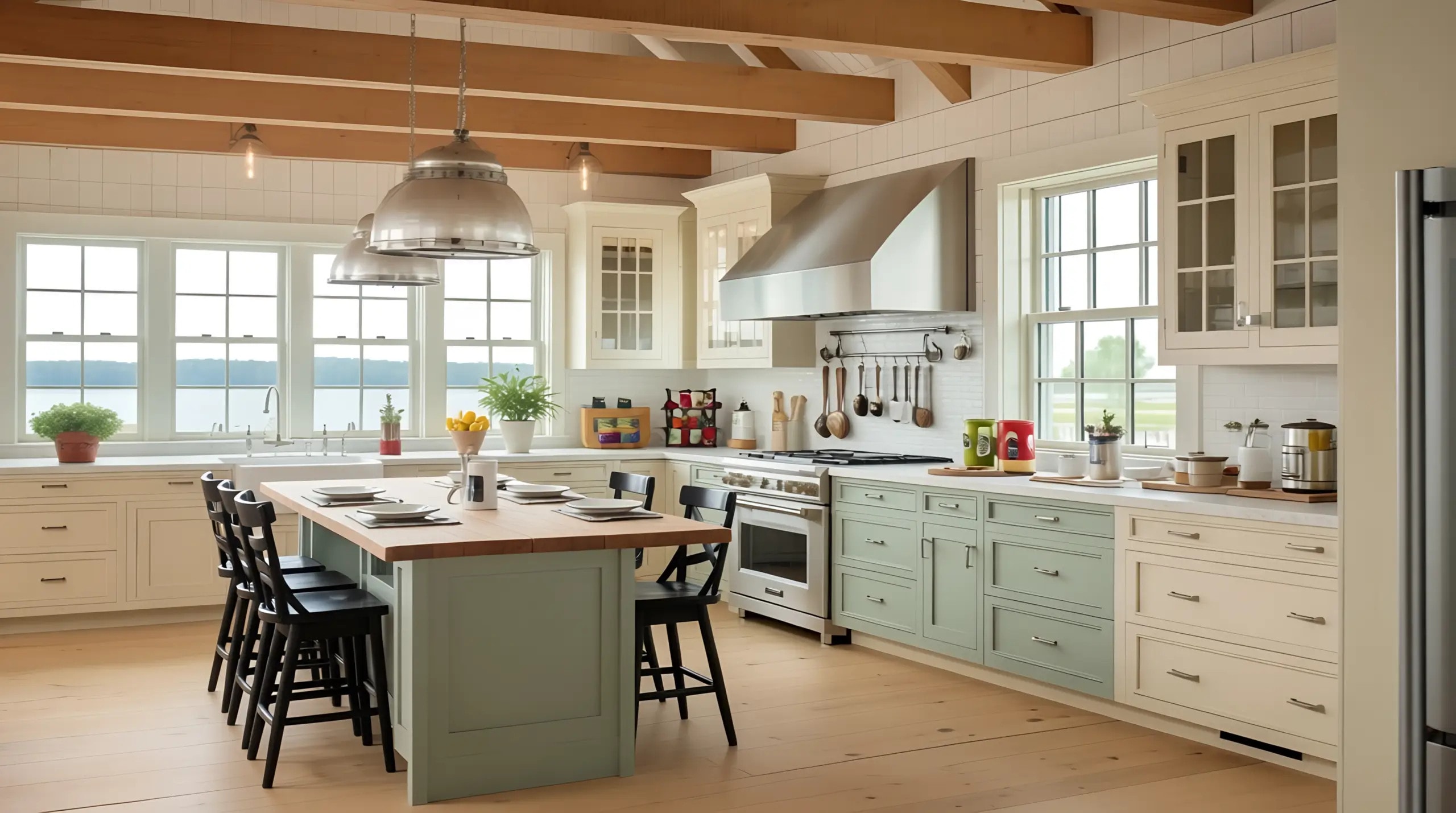
- Farmhouse: Cozy and classic. Defined by apron-front sinks, Shaker cabinets, and warm wood accents in neutral tones. It creates a welcoming, tactile environment that feels grounded in tradition and comfort. This direction works exceptionally well for busy families who appreciate a “lived-in” charm that ages gracefully over time.
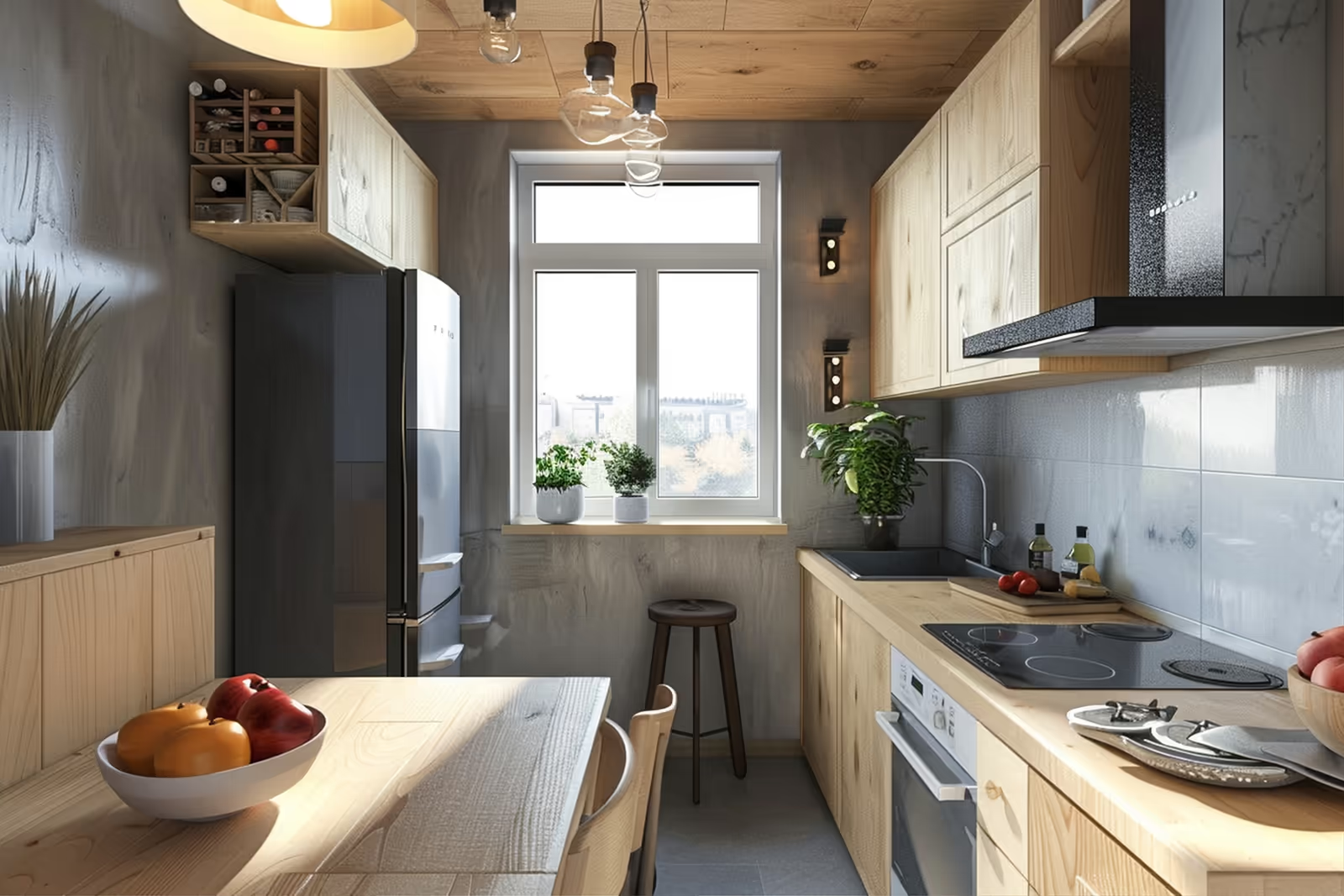
- Japandi: A blend of Japanese minimalism and Scandi warmth. Focuses on light oak, clutter-free counters, and a zen atmosphere. By combining organic shapes with a strict “less is more” philosophy, it creates a sanctuary-like space for cooking and gathering. This style is perfect for homeowners looking to reduce visual noise and cultivate a sense of daily calm.
- Scandinavian: Bright and functional. Uses white walls, natural wood, and glass-front cabinets to maximize light. Every element is designed to feel airy and efficient, making it a powerful solution for spaces with limited sunlight. It leans heavily on practical storage and honest materials to provide a cheerful, productive work environment.
- Transitional: The “safe bet.” Merges traditional Shaker styles with contemporary hardware and sleek countertops for a timeless look. This approach is rich with kitchen design ideas for those who want the warmth of a classic home paired with the clean efficiency of modern materials. It offers incredible flexibility, ensuring your kitchen harmonizes with almost any architectural style.
- Industrial: Combines exposed brick, concrete, and metal shelving—perfect for open-plan or loft living. It celebrates structural elements that are usually hidden, giving the kitchen a bold, professional-grade character. This design is best suited for those who want a durable, high-impact space that isn’t afraid to show its hardware.
Small Kitchen Design Ideas That Actually Work
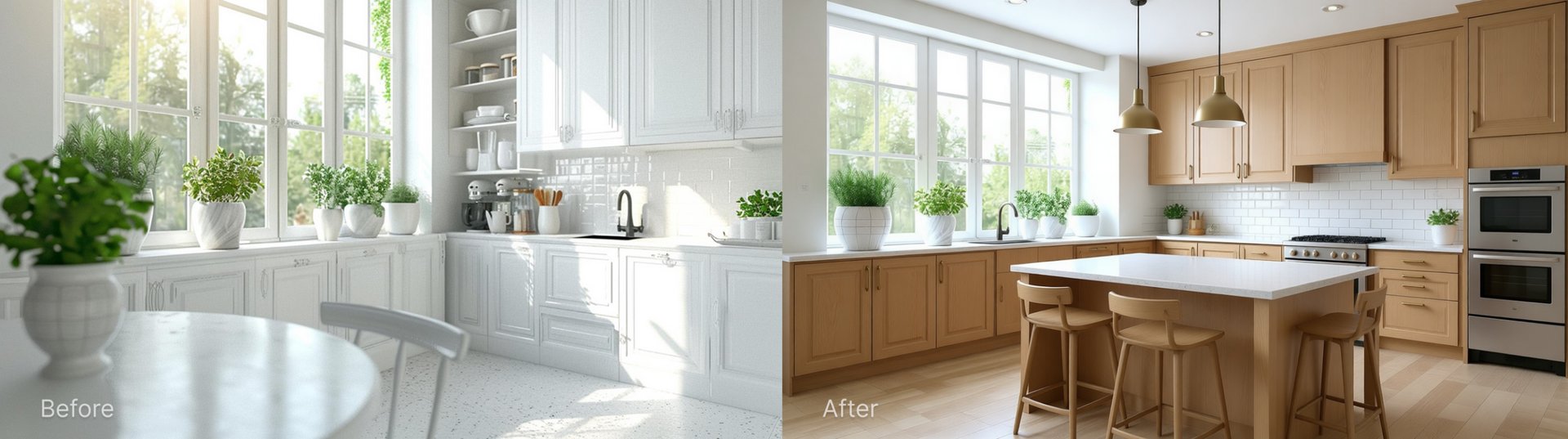
Small kitchens don’t have to feel like a compromise. A truly functional compact kitchen is the result of smart layout decisions, not just square footage.
Here is how to maximize every inch:
- Go Vertical: Install floor-to-ceiling cabinets to add storage without losing floor space. Use glass-front uppers to keep the room from feeling “boxed in.”
- Clear the Counters: Hide daily appliances, such as toasters and kettles, in a dedicated cabinet. Removing visual clutter is the fastest way to make a kitchen feel larger.
- Prioritize Light Palettes: Whites, creams, and pale oaks reflect light and visually “push back” the walls. Save dark colors for spaces with abundant natural lighting.
- Choose Efficient Layouts: L-shaped configurations keep the work triangle tight, while Galley kitchens maximize efficiency for solo cooks by keeping everything within arm’s reach.
- Add a mirror or reflective backsplash: In 2026, reflective backsplash materials, including mirrored tile and metallic subway tile, are gaining traction in small kitchens specifically because they bounce light and create a greater sense of depth, according to design editors at Homes and Gardens.
Galley Kitchen Design Ideas
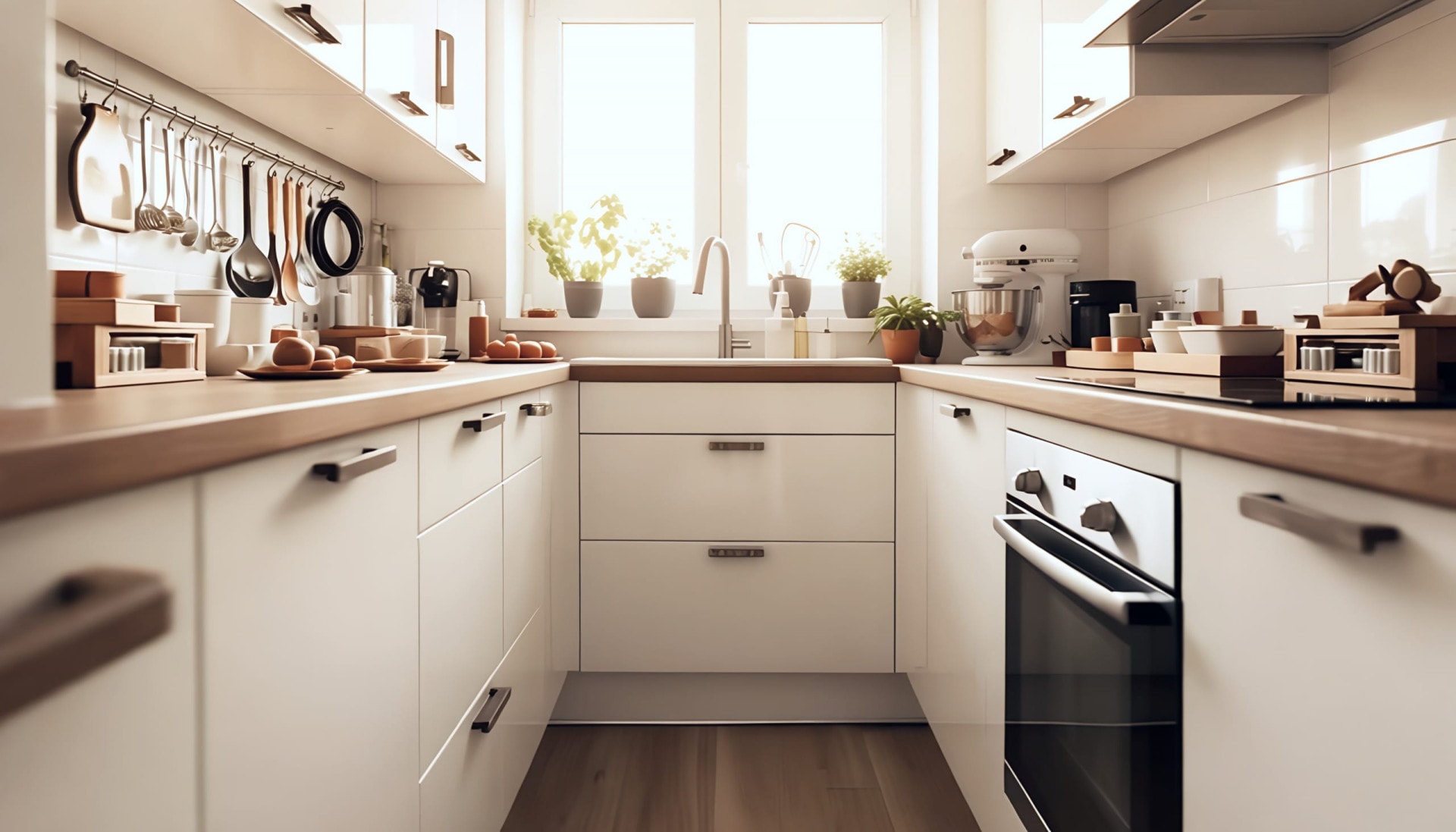
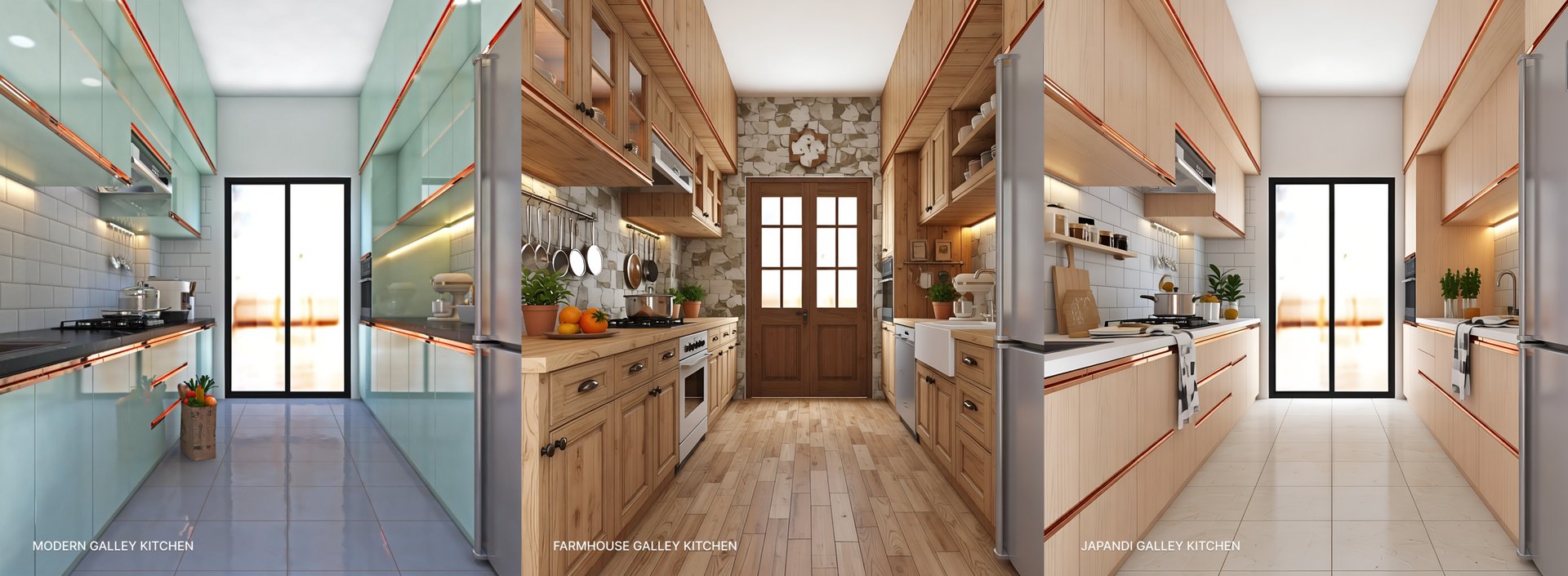
A galley kitchen runs along two parallel walls with a single corridor between them. It is one of the most efficient layouts ever designed because every major work zone stays within a few steps of the others. The “work triangle” essentially builds itself.
The primary challenge is making a galley feel open rather than tight. These design ideas address both function and flow:
- Create Depth with Contrast: In a galley, contrast between the two walls creates depth. Try painting one wall of cabinets a darker shade while keeping the opposite wall pale. This technique makes the room feel wider than its actual footprint.
- Avoid Double-Sided Upper Cabinets: If space allows, use open shelving or no upper cabinets on one wall. Clearing one side of the corridor draws the eye upward and eliminates the “tunnel effect” that makes galley kitchens feel narrow.
- Use Consistent Flooring: Run the same floor tile straight through the corridor without rugs or borders. This visually extends the length of the space and ensures movement through the kitchen feels clean and uninterrupted.
- Integrate Your Appliances: Paneled or built-in appliances reduce visual interruptions in a parallel layout. A refrigerator that blends seamlessly into the cabinetry line removes one of the biggest physical disruptors in a narrow space.
- Think about the end walls: The short ends of a galley are often overlooked. A window on one end brings in natural light that travels the full length of the kitchen. Alternatively, a statement tile or bold paint color on the far wall creates a focal point that makes the space feel intentional.
Kitchen Island Design Ideas
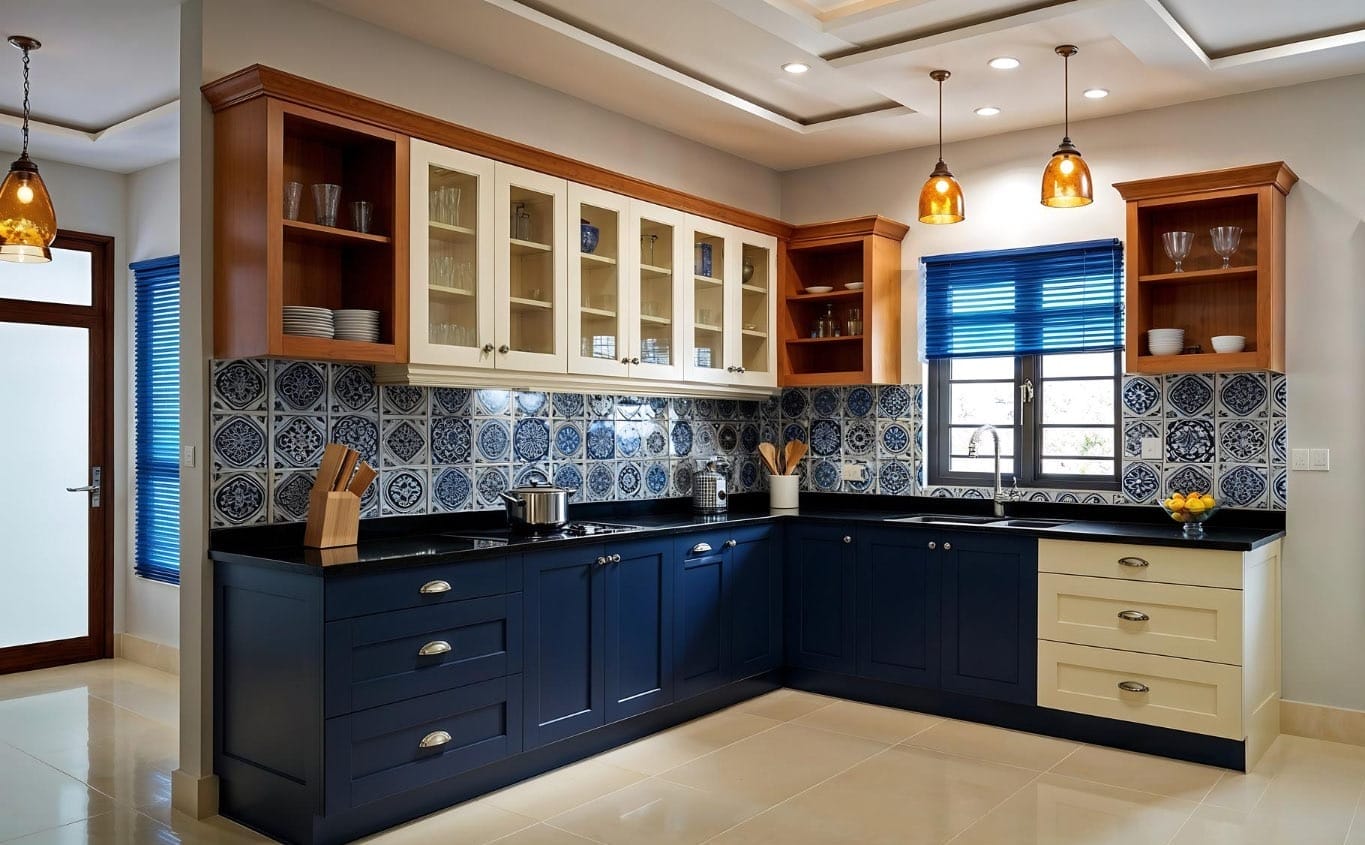
A kitchen island changes how a kitchen functions at a fundamental level. It adds prep space, creates a natural gathering point, and gives an open-plan kitchen a clear sense of purpose.
These island design ideas cover both practical utility and visual impact:
- Decide on Contrast or Cohesion: An island in a contrasting color creates an instant focal point. For example, a warm oak island in a white kitchen or a navy island in a light gray kitchen adds character without extra decor. Conversely, a matching island looks cleaner and more formal.
- Prioritize Seating Comfort: An island with bar stools turns prep time into social time. Ensure the countertop overhang is between 12 and 15 inches for comfortable knee clearance. Anything less makes the seating feel cramped and unusable.
- Maximize Under-Island Storage: Incorporate drawers on the prep side and open shelving or a wine rack on the other. This ensures the island is one of the hardest-working pieces of furniture in the room.
- Consider a Waterfall Countertop: A countertop that continues down the sides to the floor is a hallmark of contemporary design. This look is especially striking in materials like marble, quartz, or sintered stone.
- Respect the Footprint: Avoid forcing an island into a small space. The minimum corridor width should be 42 inches for one cook or 48 inches for two. If your kitchen is too tight for a permanent fixture, a rolling island is a practical, flexible alternative.
Modular Kitchen Design Ideas
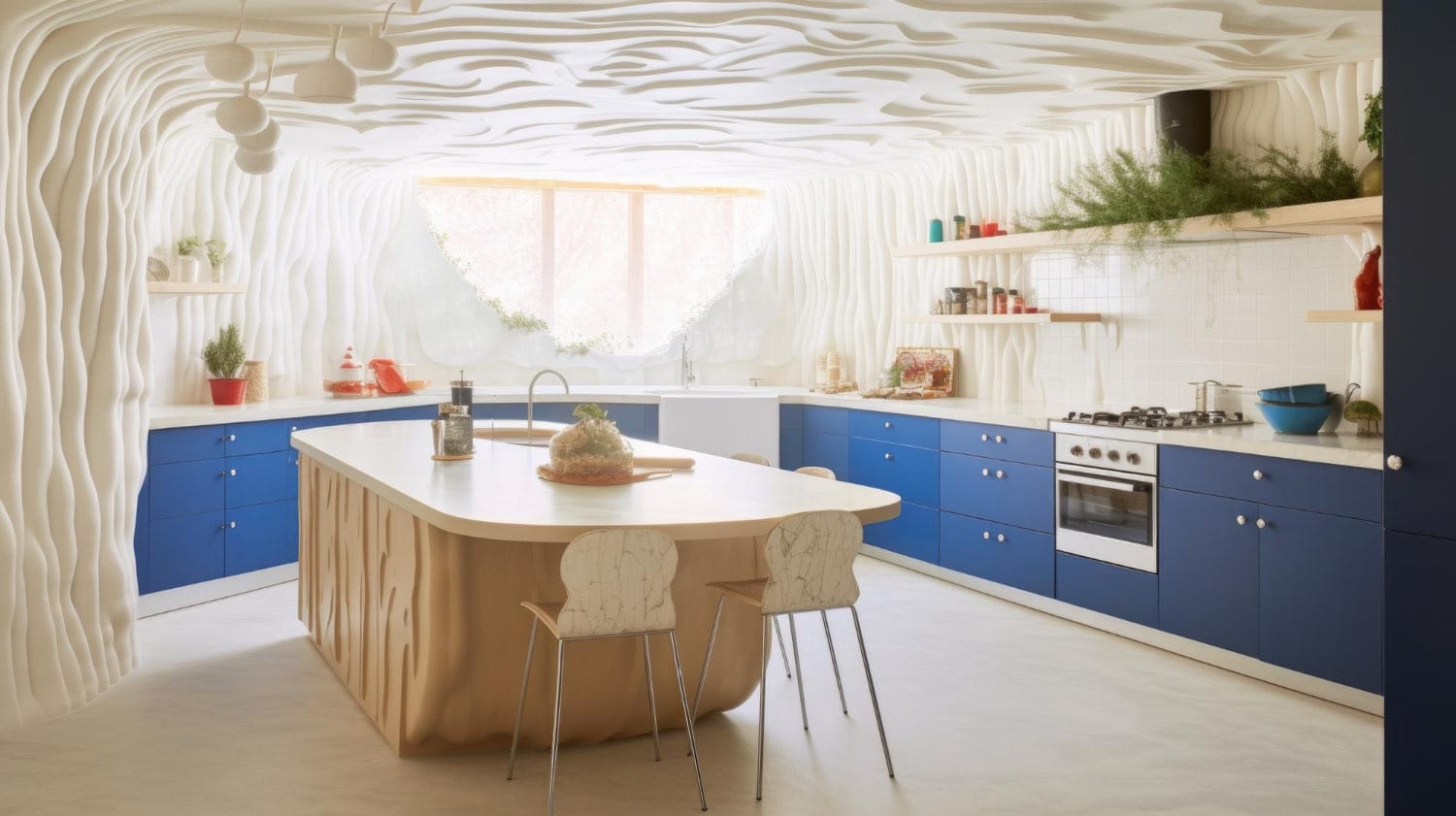
A modular kitchen is built from pre-made cabinet units, including base cabinets, wall cabinets, pantry units, and drawer towers. These pieces assemble like building blocks, allowing you to configure a system that suits your specific room. The primary advantage of modular design is flexibility. Individual units can be replaced, reconfigured, or added as your needs change without requiring a full renovation. This versatile approach is a signature of many beautiful homes, providing a high-quality kitchen design idea solution for renters and apartment dwellers without a permanent build.
Popular Modular Kitchen Configurations:
Single-Wall Kitchen
This configuration places all your modular units along a single run, creating a clean and minimal aesthetic. It is an ideal solution for studio apartments or open-plan living areas where space is at a premium, and the kitchen must blend seamlessly into the background. By utilizing vertical wall cabinets, you can maximize storage without encroaching on the rest of the room’s floor plan. This layout is often the most cost-effective to install, as it requires the least amount of plumbing and electrical rerouting.
L-Shaped Kitchen
As the most versatile modular configuration, the L-shape utilizes two adjacent walls to create a natural and efficient workflow. It works exceptionally well in small to medium-sized rooms because it keeps the center of the floor open for movement or a small dining table. This design naturally facilitates the “work triangle,” placing the stove, sink, and refrigerator in a convenient, reachable sequence. Because it is tucked into a corner, it provides ample counter space while maintaining an airy, uncluttered feel.
U-Shaped Kitchen
For homeowners who prioritize maximum storage and expansive prep surfaces, the U-shaped layout is the gold standard. By placing units along three walls, you create a dedicated cooking zone that keeps everything within a quick pivot of the chef. This configuration works best in larger, dedicated kitchen spaces where there is enough width for a comfortable central corridor. It effectively eliminates through-traffic, ensuring that the cooking area remains a private and highly productive station.
Parallel (Double Galley) Kitchen
This layout features two parallel runs of modular cabinets facing one another, creating a high-traffic corridor that is incredibly efficient for serious cooking. It is a favored choice for larger homes or households with multiple cooks, as it offers two distinct work zones that prevent crowding. The parallel design allows for a massive amount of base and wall storage, ensuring every appliance and utensil has a designated home. When planned correctly, it provides a professional, organized atmosphere that makes meal preparation feel fast and fluid.
For ideas on how to layer smart storage and organization into a modular kitchen layout, the smart kitchen design guide covers pull-out solutions, zone organization, and countertop management in detail.
Modern Kitchen Design Ideas for 2026
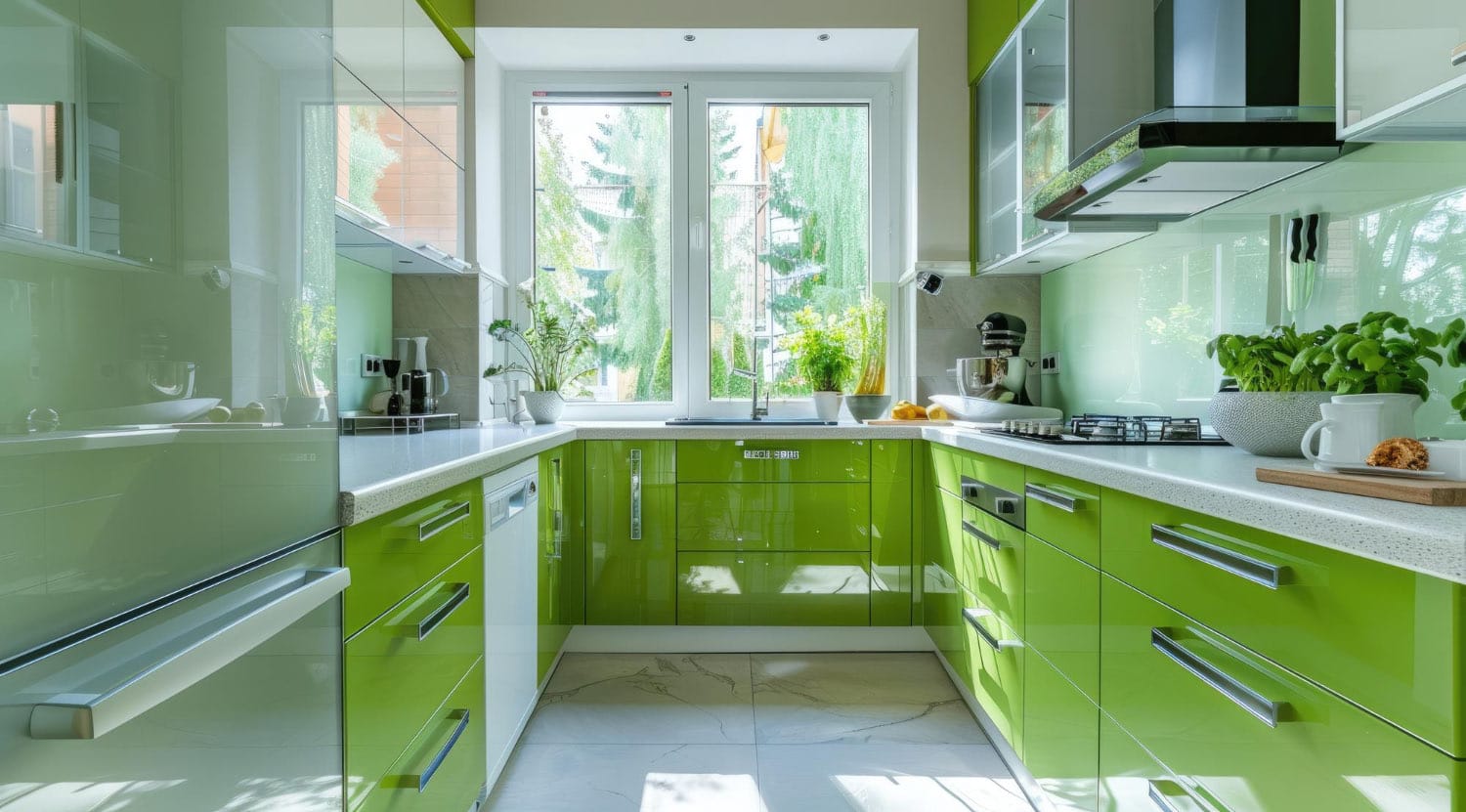
Modern design in 2026 focuses on editing: removing the unnecessary while making essential elements work harder. While minimalism remains the foundation, the palette has shifted from cool grays to warmer, earthier tones.
Experts at Parker Kitchens suggest keeping expensive elements like cabinetry and layouts timeless, while using paint and hardware to introduce trends.
Key 2026 Modern Trends:
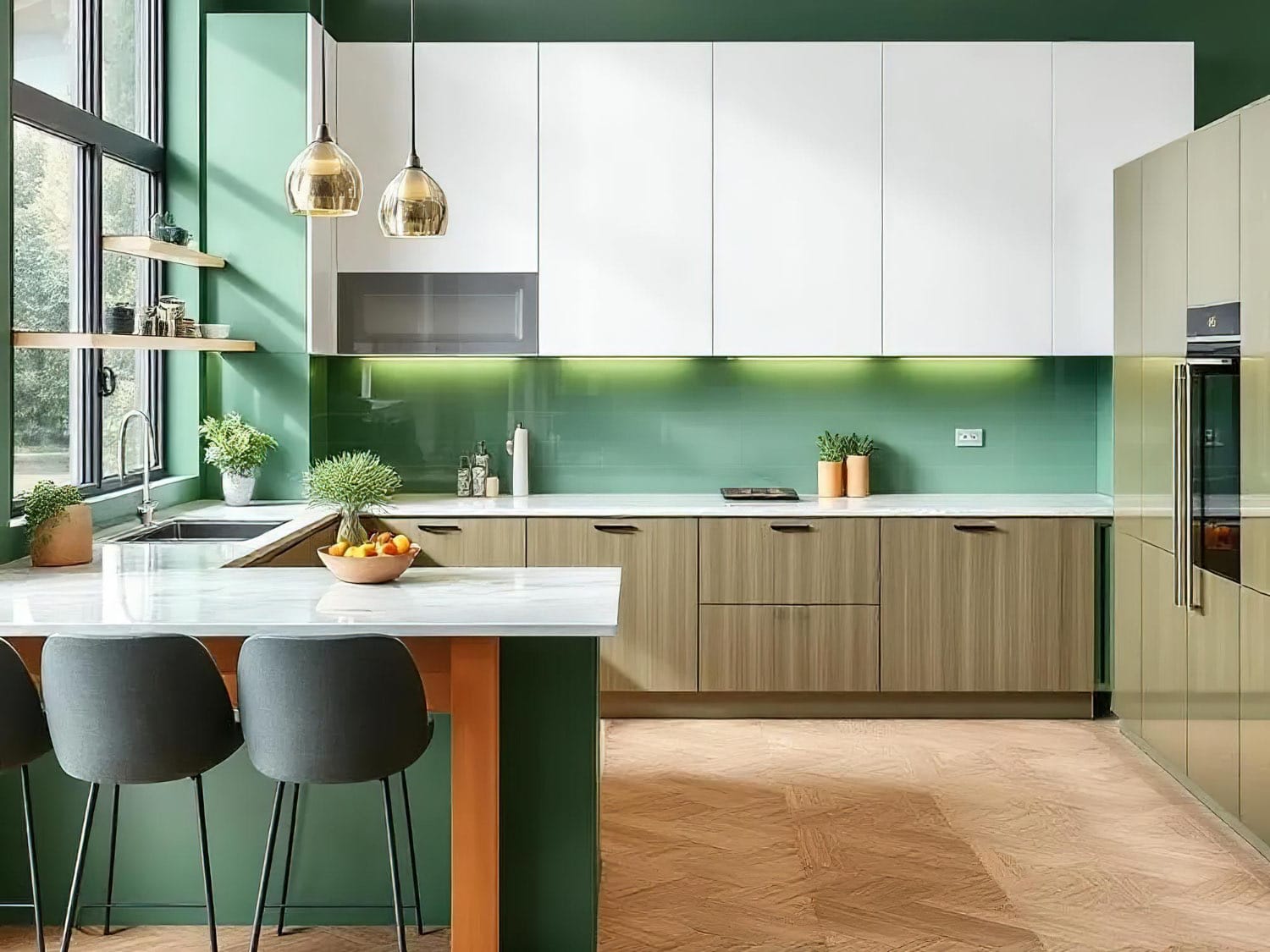
- Warm Palettes: Sage green, washed oak, and terracotta are replacing stark white. Two-tone cabinetry remains a popular way to add depth.
- Handleless Cabinets: Flat-panel doors with push-to-open mechanisms or recessed grooves create an uninterrupted, contemporary look.
- Durable Surfaces: Quartz and sintered stone are the preferred materials for their longevity and stone-like aesthetics.
- Hidden Appliances: Integrated, paneled appliances ensure the kitchen looks like a cohesive living space rather than a utility room.
- Asymmetric Lighting: Statement pendants arranged at varying heights add architectural interest without structural work.
Explore more modern kitchen design ideas.
Outdoor Kitchen Design Ideas
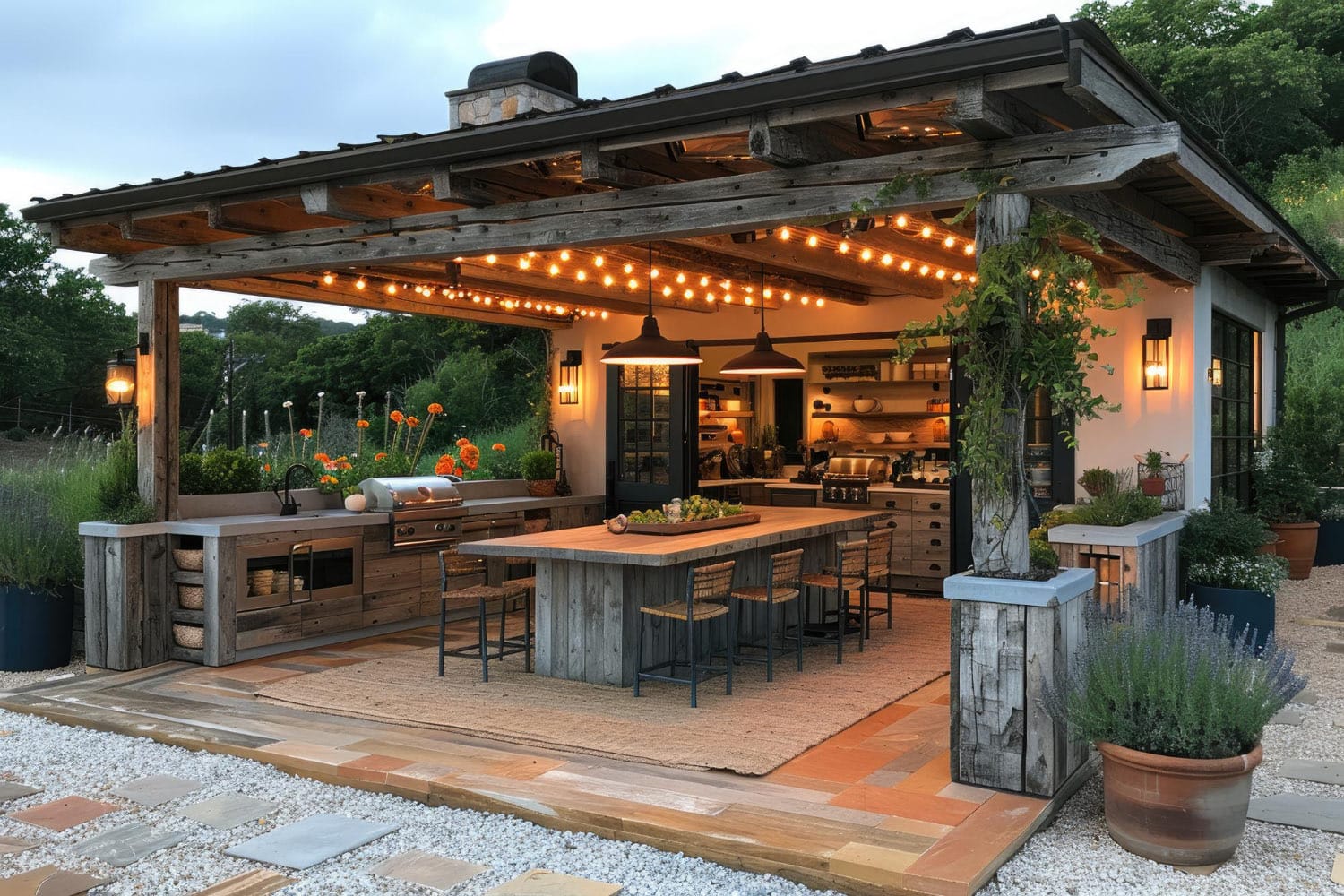
An outdoor kitchen takes the core functional elements of an indoor kitchen and moves them outside. At its simplest, this involves a grill with a side counter. In a more developed setup, it includes a fully equipped station with a sink, refrigerator, bar seating, and weatherproof cabinetry.
These design ideas work across a range of budgets and exterior spaces:
- Anchor with the Cooking Zone: A built-in grill or pizza oven should be the centerpiece. All other elements, such as counter space, storage, and seating, should be organized around this focal point.
- Use Weatherproof Materials: Stick to stainless steel cabinets, concrete or porcelain countertops, and teak or powder-coated aluminum for structural elements. Avoiding interior finishes is essential, as they deteriorate quickly when exposed to the elements.
- Incorporate Shade: Direct sun makes cooking outdoors uncomfortable. A pergola, extended roof overhang, or a simple shade sail over the cooking zone dramatically improves the usability of the space.
- Connect the Spaces Visually: Repeating one material from your indoor kitchen, such as the same tile, countertop stone, or cabinet color, ties the spaces together. This ensures the outdoor kitchen feels like an intentional extension of the home.
- Add Strategic Lighting: Waterproof strip lighting under counters and overhead pendants make an outdoor kitchen usable after dark. These fixtures also add atmosphere, making the space more inviting for evening gatherings.
How to Preview Kitchen Design Ideas in Your Own Space.
The most expensive mistake in kitchen design is committing to a look before you have seen it in your actual space. A style that works in a high-ceilinged magazine shoot can feel completely wrong in a compact north-facing apartment.
Seeing kitchen design ideas in your real space, with your specific walls and lighting, changes the entire decision-making process.
DecorAI‘s Kitchen Redesign tool does exactly that. You upload a photo of your current kitchen, choose a style, and generate a photorealistic redesign in seconds. You can run up to four variations per generation, adjust the AI creativity level from strict to imaginative, and compare completely different directions side by side.
Here’s how to use it:
- Take a clear photo of your kitchen. Natural light, full room in frame.
- Go to DecorAI and select the Kitchen Redesign tool.
- Upload your photo and choose a style: modern, farmhouse, Japandi, industrial, or any of the 50+ available options.
- Select your generation mode. Simple mode is fast and automatic. Pro mode gives you control over cabinets, countertops, backsplash, hardware, and lighting independently.
- Generate. Review your variations. If one direction looks right, use it as your brief for a contractor, designer, or your own renovation plan.
Before you book a single consultation or order a cabinet sample, spend ten minutes seeing your kitchen design ideas across so many styles. This process often clarifies months of indecision in a single sitting.
Explore real kitchen redesigns in the DecorAI gallery to see what the tool produces across different kitchen types, sizes, and styles.
Ready to see your Kitchen space transformed with DecorAI?
Upload one photo. See your space redesigned in seconds.
No design experience needed.
FAQ About Kitchen Design Ideas
What are the most popular kitchen design styles in 2026?
The most popular styles include modern, farmhouse, Japandi, Scandinavian, transitional, and industrial. Modern kitchens favor clean lines and flat-panel cabinets, while farmhouse styles use shaker cabinets and warm wood tones. Japandi is a top choice for those seeking a blend of Japanese minimalism and Scandinavian warmth.
What is the best kitchen layout for a small space?
The best kitchen layouts for small spaces are the galley layout and the L-shaped layout. Galley kitchens run everything along two parallel walls, keeping workflow tight and efficient. L-shaped layouts use a corner configuration that opens the rest of the floor plan for movement or a small dining area. Both are organized around the kitchen work triangle, which is the relationship between the sink, stove, and refrigerator.
What is a modular kitchen?
A modular kitchen consists of pre-built cabinet units and storage modules assembled to create a functional space. These modules include base cabinets, wall units, and tall pantries that can be configured in any layout. The primary advantage is flexibility, as you can reconfigure or replace individual units without a full demolition.
How do I choose a kitchen design style?
Start by identifying how you use your space, the amount of natural light available, and the overall “feel” you prefer. Whether you want something calm and minimal or warm and rustic, identifying these factors narrows your choices. The quickest way to test a style is to upload a photo to DecorAI to see your specific room transformed in seconds.
Can I design my kitchen with AI?
Yes. DecorAI’s Kitchen Redesign tool lets you upload a photo of your current kitchen or any space and instantly generate a photorealistic redesign. You can experiment with different styles and adjust creativity levels to see up to four variations per run. No design experience is required. See DecorAI’s flexible pricing plans to get started.
What kitchen colors are trending in 2026?
Trending colors for 2026 include sage green, washed oak, earthy terracotta, and soft navy. Two-tone kitchens that pair darker lower cabinets with lighter uppers are also gaining popularity. Most homeowners are opting for matte finishes rather than high-gloss to create a more grounded and contemporary feel.